
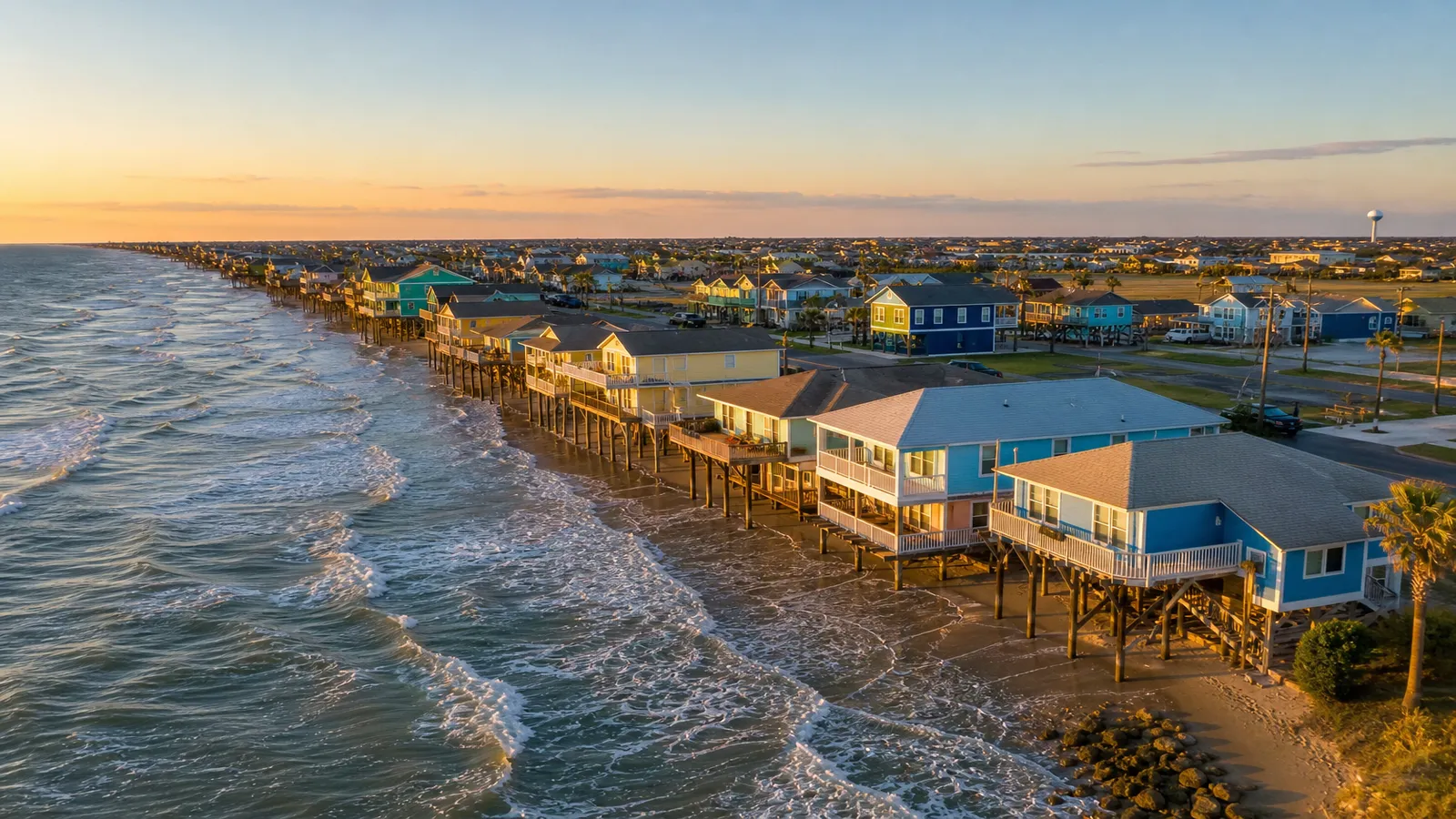
How much can you make on Airbnb in Galveston? Owners ask us that first, before anything else. The honest answer is a range. Galveston is a seasonal beach market for short term rentals where a well-located four bedroom beach house can gross six figures and a small inland condo can struggle to clear $22,000. The typical island listing grossed about $45,175 over the last twelve months, and entire-place vacation rental listings averaged $45,641.
This guide walks through the real numbers, pulled from Surge's short term rental market data for the area in August 2026, so you can build an estimate for your own property instead of guessing from a single island-wide average. We also cover the costs that come off the top, including the 15% hotel occupancy tax and the city registration rules that got teeth in 2025.
Quick Answer: How Much Can You Make on Airbnb Galveston Island?
Here is the short version for short term rentals across Galveston Island and the surrounding county:
- Average annual revenue, all listings: about $45,175 in gross revenues
- Entire-place listings: about $45,641 gross
- Houses: about $51,951 per year; condos and apartments: about $31,204
- Average daily rate: $317.95 across all listings, $321.66 for entire homes
- Average occupancy rate: 45.1% market-wide
- Revenue growth: about +6.2% year over year
- Active listings: roughly 9,415 short term rentals marketwide
That works out to average monthly revenue near $3,760 for a typical entire-place listing, but the monthly spread is enormous in a beach market. July alone produced about $8,076 per listing, while January produced about $1,825. Top operators, the ones with strong photos, dynamic pricing and fast guest communication, routinely earn 1.5x to 2x the market average for the same property type.
One caveat before you run the math: the market definition covers Galveston Island plus mainland Galveston County and Bolivar Peninsula, not just the island city. Rentals in Galveston city proper behave differently from Texas City or League City, so we break the submarkets apart below.
Key Metrics: Average Annual Revenue, Average Daily Rate and Occupancy Rates
Four numbers drive every revenue projection for short term rentals on Galveston Island. Learn them once and you can evaluate any available rental on the island in about ten minutes.
Average Daily Rate
The average daily rate is what a listing actually books at, not the rate you post. The market average daily rate is $317.95 across all active listings and $321.66 for entire homes. Professionally managed listings book at $357.79, about 11% above the entire-home market average, and luxury-tier properties book at $523.47. That gap is the clearest argument in this market for professional pricing and revenue management: property managers here are not discounting to fill the calendar, they are holding higher nightly rates through the shoulder season.
Occupancy Rates
The median occupancy rate here is 45.1%, which reads low next to inland Texas cities but is normal for a beach destination. Galveston does not fill Tuesdays in February. It fills weekends, spring break, summer and event weekends at high rates and sits quiet in between. Average length of stay is 3.29 nights and booking lead time averages 44 days, both signs of a trip-planned leisure market rather than a business-travel one.
Average Annual Revenue
Average annual revenue is the number owners care about, and here it is $45,175 across all listings. Houses average $51,951 while condos and apartments average $31,204. A whole beach house with spacious layouts, a game room and a real ocean view is a different product from a one bedroom condo, and the revenue gap of roughly $20,000 a year reflects that.
Revenue Growth and Competitive Supply
Galveston Airbnb revenue grew about 6.2% year over year in the last twelve months versus the prior twelve. That is healthy for a mature market carrying roughly 9,415 active listings. Supply is the real constraint here: this is one of the most heavily hosted short term rental markets in Texas, with short term rentals in nearly every island neighborhood, so revenue growth comes from operating better than the listing next door, not from the tide lifting every boat.
Revenue by Submarket: Where Galveston Airbnb Listings Earn Most
The market splits into eight submarkets, and the spread between the best and worst is more than $30,000 a year.
| Submarket | Avg annual revenue | Average daily rate | Occupancy |
|---|---|---|---|
| Port Bolivar | $53,922 | $438 | 42.9% |
| Galveston (island city) | $40,107 | $302 | 44.9% |
| Santa Fe | $38,806 | $421 | 40.1% |
| Kemah | $31,961 | $214 | 47.8% |
| Dickinson | $31,620 | $220 | 52.7% |
| League City | $28,761 | $134 | 71.5% |
| Texas City | $22,090 | $115 | 59.3% |
| La Marque | $21,887 | $157 | 45.8% |
Three patterns matter for property owners here. First, Port Bolivar tops the table because the inventory skews toward large beachfront homes at a $438 average daily rate, even though occupancy is the second lowest on the list. Second, mainland League City posts 71.5% occupancy at a $134 rate, which is a different business entirely: steady midweek demand from the Clear Lake and NASA corridor on Galveston Bay, closer to an extended-stay model than a beach vacation rental. Third, the island city itself sits in the middle at $40,107, and inside it the range is wider than any table can show, because a house two blocks from the seawall and one twenty blocks inland are not the same asset.
If you are weighing the island against the mainland, the short version is that beachfront buys you rate and inland buys you occupancy. Both can work. They just require different pricing strategy and different guest expectations.
Seasonality: Peak Season Carries the Year
Galveston Island revenue is front-loaded into a short peak. Per-listing revenue by month over the last year looked like this:
- July: about $8,076
- June: about $6,983
- May: about $4,502
- March, spring break month: about $4,029
- January: about $1,825
June and July together delivered roughly $15,059 per listing, about a third of the year in two months. That has three consequences. You cannot judge a Galveston property on a winter trial run. You must not underprice peak summer months, because a $40 nightly mistake in July costs more than an empty week in December. And you need a shoulder-season plan built around seasonal events: spring break, the Lone Star Rally in November, Mardi Gras, and the holiday festivals along the Strand Historic District all move calendars that would otherwise sit empty.
Snowbird and monthly stays are the other lever. Some Galveston Island owners take 30-plus night winter bookings at a discount rather than fight for two-night stays in January, which trades rate for certainty and cuts turnover costs.
What Drives Galveston Airbnb Revenue Above the Market Average
Two properties on the same street can be $20,000 a year apart. The differences that show up in the historical data are consistent.
- Bedroom count and sleeping capacity. Galveston demand is group demand: families, reunions, friend trips. Revenue scales with heads in beds more than square footage.
- Beach access. Walkable beach proximity is the single strongest rate driver on the island, and it is why the peninsula and beachfront island homes carry $400-plus rates.
- Pool or hot tub. Extends the bookable season into March and November instead of leaving those weeks flat.
- Game room and kid-friendly features. Bunk rooms, board games and outdoor showers move families off comparable properties that lack them.
- Parking and pet policy. Two truck-and-trailer parking spots and a pet-friendly policy widen the booking pool noticeably.
- Operations. Smart locks, same-day cleaning turns, honest photos and replies within minutes rather than hours. Ranking and review scores follow response behavior, and ranking drives occupancy.
Location beyond the beach matters too. Guests book Galveston for local attractions: Moody Gardens, the Pleasure Pier, Galveston Island State Park, the Galveston Railroad Museum and its restored passenger cars, the Texas Seaport Museum, the Bryan Museum, the historic mansions of the East End and the Victorian era homes and shops of the historic Strand District. Younger guests cluster near the seawall and the bars; families cluster near the state park and Moody Gardens. A listing that names its nearest local attractions and real walk times converts better than one that says "close to everything." Our free Airbnb map maker builds that attraction map for your listing photos in a couple of minutes.
What You Actually Keep: Operating Costs and the Local Hotel Occupancy Tax
Gross revenue is not income. For a Galveston vacation rental grossing $45,000, a realistic cost stack looks like this:
| Cost | Typical range | On $45,000 gross |
|---|---|---|
| Platform fee (Airbnb host-only) | about 15.5% | $6,975 |
| Cleaning (usually offset by cleaning fee) | pass-through | $0 net |
| Full service management | 15% to 25% | $6,750 to $11,250 |
| Utilities, internet, lawn, pest | $300 to $500/month | $3,600 to $6,000 |
| Supplies and restocking | 3% to 5% | $1,350 to $2,250 |
| Maintenance and salt-air upkeep | 5% to 8% | $2,250 to $3,600 |
| Insurance (coastal, wind and flood) | varies widely | $4,000 to $9,000 |
| City registration | $250 per unit per year | $250 |
Coastal insurance is the line that surprises mainland investors most. Windstorm and flood coverage on Galveston Island is a materially larger expense than the same policy inland, and it belongs in your model before you buy, not after.
The hotel occupancy tax is a pass-through paid by the guest, not by you, but you are responsible for it being filed correctly. Galveston lodging carries 15% total: 9% city hotel occupancy tax collected by the City of Galveston and the 6% state tax collected by the Texas Comptroller. Airbnb and Vrbo collect and remit both for platform bookings under a 2021 city ordinance, but per the city's short term rental FAQ you still have to file returns, including zero reports, on a monthly or quarterly basis. Reports are due by the 20th of the month after the reporting period; properties under $500 of tax per month or $1,500 per quarter may file quarterly. Direct bookings taken on your own payment system are yours to collect and remit. Details and filing links are on the city's Hotel Occupancy Tax page.
Galveston Short Term Rental Regulations You Must Budget For
Regulations covering short term rentals were tightened by ordinance in 2025, and the enforcement side is real. The current local regulations require:
- Annual registration: $250 per rental unit per year, with a GVR registration number issued to the property.
- Renewal window: December 1 through December 31 each year, with a $500 late fee after December 31 unless the property changed ownership.
- Delisting risk: unrenewed registrations are reported to the booking platforms and the listing is removed. Getting reinstated is on you.
- 24 hour contact: emergency contact information for a responsible person who lives within one hour of the property.
- Compliance monitoring: the city uses the Rentalscape platform to track short term rentals, which scans listing sites daily and cross-references registrations, plus a 24/7 complaint hotline.
Registration was previously handled by the Galveston Park Board and now runs through the city. Occupancy limits, parking and noise rules also apply, and repeat violations put a registration at risk. None of this makes Galveston a hard market to operate in, but it does make absentee ownership from Dallas or out of state risky without someone local on the hook for that one-hour response. Our full breakdown lives in Galveston TX short term rental laws.
Three Realistic Scenarios for Rentals in Galveston TX
Numbers below use market averages for property type and assume competent operation, not best case.
Two bedroom Galveston Island condo near the seawall
Gross about $31,200. After the platform fee, 20% management, utilities, supplies, HOA, insurance and maintenance, expect roughly $9,000 to $13,000 before mortgage and property tax. This is a lifestyle-plus-offset property, not a cash cow.
Three bedroom Galveston Island house, walkable beach access
Gross about $45,000 to $52,000, in line with the house average of $51,951. Net after all operating costs typically lands near $14,000 to $20,000 before debt service. This is the core Galveston Airbnb investment case, and the property type most vacation rental buyers should model.
Five bedroom beachfront home, Bolivar Peninsula or west end
Gross $80,000 to $110,000 is achievable at peninsula-level rates with strong summer occupancy rates and group demand. Costs scale too: bigger cleans, bigger insurance, more wear. Net commonly runs $28,000 to $40,000 before debt service, with far more volatility year to year because a single soft summer moves the whole result.
Underwrite the middle scenario, not the top one. Rentals in Galveston vary too much for best-case math. If the deal only works at the fifth-bedroom best case, it is not a deal.
What Galveston Island Guests Are Booking For
Revenue in this market follows demand drivers, and Galveston Island has more of them than most Texas beach towns. Guests book short term rentals here for beach activities on the seawall and the west end, for Moody Gardens and its rainforest and aquarium pyramids, for the rides at the Pleasure Pier, and for the marine life exhibits and touch pools that make the island an easy family weekend. Galveston Island State Park pulls campers, birders and surf fishers year round, and its trail system is a genuine draw in the cooler months when beach activities slow down.
The historic core adds a second demand layer. The Strand Historic District and its shops, the Galveston Railroad Museum with its restored passenger cars, the Texas Seaport Museum and the Bryan Museum keep the historic Strand District busy on rainy weekends, and the Victorian era homes and historic mansions of the East End draw a slower, older traveler. Younger guests want walkable bars, Bubba Gump Shrimp on the pier and a short ride to the beach. Prime locations sit where those two worlds meet: near the seawall, within walking distance of food, and a few minutes from Moody Gardens or Galveston Island State Park.
Name these local attractions in your listing with honest walk and drive times. Vacation rental guests filter by convenience, and specificity converts.
Reading Historical Performance and Market Conditions Before You Buy
Any single year in a beach market can mislead you. Weather, a hurricane season and fuel prices all move results for short term rentals, so judge a Galveston vacation rental on historical performance across at least two full years rather than one summer. The 2025 to 2026 window shows a stable picture: revenue up about 6.2%, occupancy rates holding near 45% across the short term rental market, and the average daily rate holding above $300 across short term rentals in the Galveston market.
Market conditions to watch going into 2027 are supply growth, insurance pricing on the island, and how strictly the city enforces registration. Multiple factors move an individual property's outcome more than the market does, though. Bedroom count, distance to sand, amenity set, pricing strategy and review score explain most of the difference between a listing at $30,000 and the same size listing at $60,000.
Rentals in Galveston reward owners who treat the property like a small hospitality business: watch the pace of bookings weekly, adjust rates by season and event, and reinvest in the amenities guests actually mention in reviews.
How Many Airbnbs Are in Galveston, and Does That Matter?
Roughly 9,415 active Airbnb listings sit in the wider market, and the city itself has thousands of registered rentals. New owners count the short term rentals and assume the market is saturated. The data says something more useful: revenue is still growing about 6.2% a year, and the spread between the top and bottom of the market is wide. Saturation punishes average short term rentals. It rewards properties that are correctly priced by season, photographed well and operated tightly. In a good market with this much competition, execution is the only durable edge.
How to Estimate Your Own Property's Airbnb Revenue
- Start with your submarket average from the table above rather than the island-wide figure.
- Adjust for bedroom count. Houses average $51,951 and condos $31,204; scale from the closest match.
- Adjust for location. Walkable beach access is worth a real rate premium; twenty blocks inland is not the same asset.
- Check comparable properties. Pull five active Airbnb listings in your ZIP with your bed count and study their calendars over June and July, not January.
- Apply the 45% average occupancy rate in year one, then subtract the cost stack above.
- Stress test at minus 15%. Hurricanes, a soft summer or a slow permitting season happen. If the property still services debt, the deal is durable.
If you want the same math for an inland Texas market, see how much you can make on Airbnb in Houston, and for the buy-side view of the island, Galveston Texas Airbnb investment.
Frequently Asked Questions
Is Galveston a good market for Airbnb in 2026?
Yes, with conditions. Average annual revenue of $45,175 and 6.2% revenue growth are strong, but occupancy rates near 45% and heavy competitive supply mean the market punishes passive owners. Properties with beach access, sleeping capacity for groups and disciplined seasonal pricing perform well.
What is a realistic occupancy rate for a Galveston vacation rental?
Plan for 45% market-wide, with summer occupancy rates well above 70% and January and February well below 30%. Mainland submarkets run higher occupancy at much lower rates.
Do I have to pay hotel occupancy tax if Airbnb collects it?
Airbnb and Vrbo remit the state and city portions for their bookings, but you still must file returns with the city on a monthly or quarterly basis, including zero reports, and you must collect and remit tax yourself on direct bookings.
How much does short term rental registration cost in Galveston?
$250 per unit per year, renewed between December 1 and December 31, with a $500 late fee afterward. Unregistered properties get reported to the platforms and delisted.
Should I self-manage or hire a property manager?
If you live within an hour of the island and can meet the 24 hour contact requirement yourself, self-management is realistic. If you do not, factor 15% to 25% for full service management and compare it against the professionally managed rate premium of about 11% in this market plus the hours you get back.
Quick Answers
- Average Galveston Airbnb revenue: $45,175 per listing per year
- Houses vs condos: $51,951 vs $31,204
- Average daily rate: $317.95 market-wide, $357.79 professionally managed
- Occupancy: 45.1%
- Peak months: June and July, about $15,059 combined per listing
- Taxes: 15% total hotel occupancy tax, 9% city plus 6% state
- Registration: $250 per unit per year
Thinking about buying or switching managers on the island? Compare your options in our guide to the best Airbnb management companies in Galveston, or talk to our team about what your specific property should be earning.
Comparing Texas markets? See the same analysis for Austin in how much you can make on Airbnb in Austin.

Written by
Humberto MarquezFounder, Surge
Founder of Surge and licensed Texas real estate broker. Manages short-term rentals across 12 U.S. markets and invests in STRs himself. Quoted in Martha Stewart, Yahoo Finance, Realtor.com, Bob Vila.
More about Humberto →See what your property could earn with Surge
Full-service short term rental management across Texas and Florida. Get a free property assessment and revenue estimate, no commitment.