
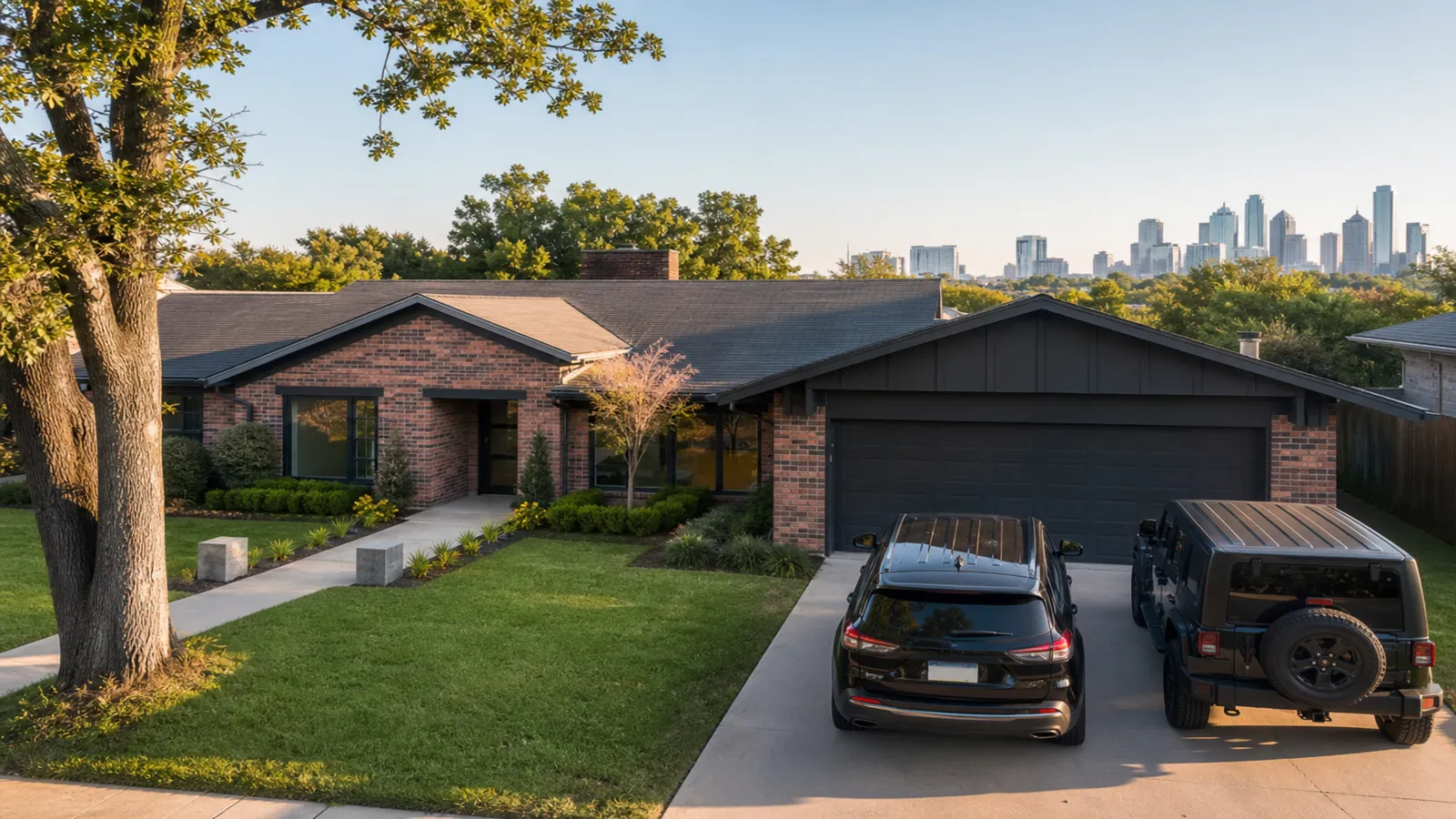
How much can you make on Airbnb in Dallas? Owners ask us that every week, and the honest answer is a range, not a single number. Dallas is a big, business-travel-heavy market for short term rentals where a four bedroom house in a good suburb can gross close to $50,000 a year while a small uptown apartment lands near $29,000 in total revenue. The typical Dallas listing produced about $35,499 in gross revenue over the last twelve months, and entire-place Airbnb listings averaged $39,951 in annual Airbnb revenue.
This guide breaks down the real earnings data for Dallas Airbnb properties and short term rentals, pulled from Surge short term rental market data on August 29, 2026, so you can build a revenue estimate for your own property instead of guessing from one citywide average or a generic Airbnb calculator. We also cover what comes off the top, including the 15% combined hotel occupancy tax, and you can compare the city against our full Airbnb occupancy rate benchmarks, and the court fight that still decides whether your neighborhood stays legal.
Quick Answer: How Much Can You Make on Airbnb Dallas Owners Should Expect
Here is the short version of Airbnb income in Dallas right now:
- Average revenue per active listing: about $35,499
- Entire-place listings: about $39,951
- Houses: about $48,213 per year by property type; apartments and condos: about $29,678
- Average daily rate ADR: $178.82 across all listings, $203.05 for entire homes, $256.60 for houses
- Average occupancy rate: 60.4% market wide, the highest of any large Texas market we track
- Revenue growth: about +1.0% year over year
- Active listing count: about 20,751 short term rentals across 55 submarkets, one of the deeper Airbnb markets in the South
That works out to average monthly revenue near $3,330 for a typical entire-place listing. Top operators, the ones with strong photos, dynamic pricing and fast guest communication, routinely earn 1.5x to 2x the market average with the same property type on the same street. The gap between a good Dallas Airbnb and an average one is wider than the gap between most neighborhoods.
One caveat before you run the math. The Dallas market is a metro definition, not the city limits. It includes Frisco, Flower Mound, Lewisville, Rowlett, Red Oak, Cedar Hill and other suburbs, and those areas behave very differently from Downtown Dallas. We break the submarkets apart below.
Key Metrics: Average Annual Revenue, Average Daily Rate and Occupancy Rate
Four numbers drive every set of revenue estimates for short term rentals in Dallas, and they explain most Airbnb host earnings differences. Learn them once and you can screen any property in about ten minutes.
Average Daily Rate
The average daily rate is what a listing actually books at, not the rate you post. Across the Dallas market the average daily rate is $178.82 for every active listing, $203.05 for entire homes and $256.60 for houses. Apartments and condos average $141.45. Dallas is a rate-modest, volume-heavy market: you win here on nights sold, not on a headline nightly rate, and the Airbnb platform rewards that.
Occupancy Rate and Average Nightly Rate
Market wide average occupancy rate is 60.4%, and 60.2% for entire places. No other large Texas market we track posts a higher occupancy rate. That is the strongest occupancy among the large Texas markets we pull, ahead of San Antonio at 55.1% and Houston at 56.4%, and it is the single best argument for the Dallas STR market. Corporate travel, medical stays, relocations, sports weekends and a constant flow of conferences keep midweek nights alive and hold the average occupancy rate up, which is exactly what short term rentals in leisure-only markets struggle with.
Annual Revenue, Gross Yield and Peak Season
Average yearly revenue across all Airbnb listings is $35,499. Filter to entire-place Airbnb listings and it rises to $39,951. Filter again to houses and it is $48,213. Your property type moves the revenue estimate more than almost any other lever, because a house sleeps more guests, absorbs families and relocating employees, and can carry a real nightly rate.
Revenue Growth and Supply
Revenue per listing grew about 1.0% over the last twelve months against the prior twelve. That is close to flat, and with 20,751 active listings the market is mature. Flat market averages with rising supply is not a reason to skip the Dallas STR market. It is a reason to be honest that new money here comes from execution and property selection, not from a rising tide.
Airbnb Income by Dallas Submarket: Where Airbnb Hosts Earn Most
Surge market data splits the Dallas market into 55 submarkets. Here are the strongest and weakest by revenue per listing.
| Submarket | Avg annual revenue | ADR | Occupancy |
|---|---|---|---|
| West Dallas | $48,902 | $294 | 49.8% |
| Red Oak | $48,879 | $246 | 62.1% |
| Flower Mound | $44,054 | $242 | 61.4% |
| Roanoke | $43,923 | $220 | 63.3% |
| Northwest Dallas | $42,083 | $250 | 56.0% |
| Bachman / Northwest Highway | $41,668 | $224 | 51.7% |
| DeSoto | $40,768 | $260 | 55.5% |
| Cedar Hill | $40,684 | $253 | 51.4% |
| Lewisville | $40,494 | $204 | 65.1% |
| Rowlett | $40,113 | $227 | 57.2% |
| Frisco | $37,948 | $205 | 62.5% |
| Grand Prairie | $36,739 | $201 | 59.4% |
| Terrell | $23,603 | $158 | 43.6% |
| Southeast Dallas | $23,554 | $135 | 51.7% |
| Lancaster | $20,133 | $116 | 59.0% |
Read that table as two different businesses. West Dallas and Northwest Dallas earn on rate, with ADRs near $250 to $294 and occupancy in the low 50s: design-led properties near the Design District, Trinity Groves and the Medical District. Lewisville, Roanoke, Red Oak and Frisco earn on volume, with occupancy from 61% to 65% and mid $200s or lower rates: family houses near employers, youth sports complexes and airport corridors.
The bottom of the table matters just as much. Lancaster at $20,133 and Southeast Dallas at $23,554 show that a cheap purchase price does not create profitable short term rentals. If the guest demand is not there, high occupancy at $116 a night still leaves rental income short of what a long term tenant would pay.
Seasonality: Dallas Earns Steadily, Then Spikes
Monthly revenue per listing over the last year ran from about $2,339 in February to about $3,629 in June 2026, with July at $3,512. A peak-to-trough ratio near 1.55 is remarkably tight. Seasonal patterns here are mild: compare Galveston, where July revenue is more than four times January, and you can see why Dallas suits owners who want predictable cash flow rather than a summer sprint.
The June and July 2026 highs also reflect the regional demand surge around the FIFA World Cup matches at AT&T Stadium in Arlington. Do not underwrite next year off those two months. Build your Airbnb revenue estimate on the shoulder months, February through April, and treat major events, including State Fair and playoff weekends, as upside.
What You Actually Keep After Costs and Taxes
Gross revenue is the number Airbnb hosts quote each other. Net income is the number that pays your mortgage. Here is how a typical Dallas Airbnb at $39,951 in gross revenue breaks down for property owners, with operating expenses shown as annual figures.
| Line item | Typical annual amount |
|---|---|
| Gross booking revenue | $39,951 |
| Airbnb host service fee (15.5% host-only) | $6,192 |
| Cleaning (guest-paid pass-through in most cases) | $0 net |
| Utilities, internet, lawn (operating expenses) | $3,600 |
| Supplies, restocking, minor maintenance | $2,400 |
| Short term rental insurance | $1,800 |
| Property management fees at 20% | $7,990 |
| Net before mortgage, taxes and insurance on the property | about $17,969 |
Those are day to day operations numbers for a three bedroom house, not a luxury build. Swap in a pool, a hot tub or a larger home and both revenue and expenses rise. The point of the table is the shape: management fees and platform fees are the two biggest controllable lines, and neither one is where you should shop purely on price.
The 15% Hotel Occupancy Tax and Local Occupancy Taxes
Dallas hotel occupancy tax is 9% of net room revenue at the city level, and the State of Texas adds 6%, for 15% combined. The City of Dallas states plainly that every person owning, operating, managing or controlling a hotel or short term rental in the city must collect the tax, report collections and remit payment, and that registration is free. Details are on the City of Dallas hotel occupancy tax page and the state side is documented by the Texas Comptroller.
Airbnb collects and remits the state portion for most listings, and that is where owners get caught. Platform collection does not automatically cover the city portion, and it never covers your reporting obligation. Register, file on schedule, and file zero reports for months with no bookings. Sorting this out after a city notice costs far more than doing it correctly from month one.
Dallas Short Term Rental Rules You Have to Budget For
Dallas is the one Texas market where the legal question is still open, and any honest Airbnb income projection has to price that in. In June 2023 the City Council passed ordinances that would have banned short term rentals from single family residential districts. A December 2023 temporary injunction blocked enforcement, the Fifth Court of Appeals affirmed that injunction, and the case is now at the Texas Supreme Court, which ordered full merits briefing in March 2026 (case No. 25-0748).
What that means in practice: short term rentals in Dallas residential neighborhoods are operating legally today under the injunction, registration and the existing rules remain in effect, and the outcome at the Texas Supreme Court could change the picture. If you are buying a Dallas property purely as an Airbnb, underwrite a downside case where the home has to work as a mid term or long term rental. If it only works at short term rental revenue, you are taking a legal bet, not making a real estate investment.
Two structural notes. Fort Worth already prohibits short term rentals in residential districts, so the two halves of the metroplex are not interchangeable. And the suburbs write their own rules: Frisco, Flower Mound, Grapevine and others each have their own permit, occupancy and tax requirements. Check the specific city before you close, and read our Dallas short term rental laws guide for the current detail.
Three Realistic Dallas Scenarios
Two bedroom apartment, Uptown or Deep Ellum
Expect roughly $141 ADR, low 60s occupancy and about $29,000 to $32,000 in gross revenue. Business travelers and weekend visitors, low furnishing cost, and HOA or building rules that can end the business with one vote. Verify the building allows short term rentals in writing before you buy.
Three bedroom house, Lewisville, Rowlett or Grand Prairie
Expect $200 to $230 ADR, 57% to 65% occupancy and about $37,000 to $41,000 in gross revenue. This is the workhorse Dallas short term rental: relocations, insurance placements, contractors, youth sports and family visits. Predictable, easy to staff, and the property type most likely to still make sense as a long term rental if the law changes.
Four bedroom design-led home, West Dallas or Northwest Dallas
Expect $250 to $300 ADR, around 50% occupancy and $45,000 to $55,000 in gross revenue, with real upside past $60,000 if the design is strong and the pricing strategy is active. Higher furnishing budget, more guest experience work, more sensitivity to a soft month.
Operating Costs, Cleaning Fees and Net Profit
Owners underestimate operating costs more often than they overestimate revenue. In the Dallas Airbnb market the typical expenses on an entire-place house look like this, and every line moves with property size and bedroom count.
- Cleaning fees: $90 to $160 per turnover for a three bedroom, usually passed to the guest, but every unpaid mid-stay clean and every deep clean is yours.
- Platform fees: 15.5% under Airbnb's host-only model, which shows up on gross revenue figures before anything else.
- Utilities and internet: $250 to $350 a month on residential properties, higher with a pool pump or hot tubs running year round.
- Supplies and restocking: $150 to $250 a month, driven by turnover count rather than nightly rate.
- Repairs and maintenance: budget 4% to 6% of rental income, plus HVAC service twice a year in North Texas heat.
- Property taxes and insurance: Dallas County property taxes are among the highest lines in any Texas pro forma, and short term rental insurance runs $1,500 to $2,400 on a standard home.
- Professional management: 18% to 25% of gross revenue for full service, or 10% to 15% for co-hosting where you keep some day to day work.
Net profit on a well-run Dallas house typically lands between 40% and 50% of gross revenue before debt service. If your model shows 70%, you have left something out. If the deal barely covers the mortgage at market average revenue, it is not a deal, because the market average is what an average operator earns in year one.
Neighborhood Notes: Uptown Dallas, Bishop Arts District and the Suburbs
Guests search Dallas by district, so local demand is worth understanding before you buy an Airbnb property.
Uptown Dallas draws business travelers and weekend visitors who want walkable dining, upscale shopping and easy access to downtown offices. Expect strong midweek consistent demand, premium rates on event weekends and building rules that can stop the business cold. The Bishop Arts District in North Oak Cliff is the trendy neighborhood play: smaller homes, design-conscious guests, and a walkable restaurant scene that supports premium pricing on weekends. West Dallas and the Design District behave similarly with higher ADRs.
The suburbs are a different product. Frisco, Lewisville, Flower Mound, Roanoke and Red Oak sell space, parking and quiet to families and relocating employees, and they deliver higher occupancy at lower rate. Southern Dallas County submarkets like Lancaster and Terrell show what happens without local demand: occupancy without dollars.
Amenities and Property Size: What Lifts Revenue Potential
Amenities that move Dallas revenue, roughly in order of return on spend: a fenced yard with real outdoor seating, a fire pit for shoulder-season evenings, hot tubs on suburban houses, a dedicated workspace with fast wifi for business travelers, blackout curtains, and a garage or two off-street spaces. Pools pay in Dallas summers but add maintenance and liability, so treat a pool as a revenue and cost decision together.
Property size compounds all of it. Each additional bedroom raises both nightly rate and the pool of guests who can book you at all, which is why bedroom count is the strongest single predictor of revenue potential we see in our own portfolio data. A four bedroom in a $200 ADR suburb often outperforms a two bedroom in a $280 ADR core neighborhood.
Systems: Dynamic Pricing, Search Ranking and Compliance Tools
Three systems separate profitable Airbnb investments from break-even ones in a mature market.
First, dynamic pricing. Static rates leave money on the table in both directions, and dynamic pricing strategies that react to competitor pricing, day of week and local events are standard practice now. Second, distribution and search results. Channel management software lets one calendar feed Airbnb, Vrbo and direct bookings without double bookings, and consistent response times plus review velocity drive search ranking, which drives occupancy. Automated messaging handles the first reply in seconds while a human handles the real question.
Third, compliance and neighbor management. Noise monitoring devices, clear house rules, no-party screening and a local contact keep you out of code complaints, which is not optional in a city where zoning restrictions and short term rental regulations are actively being litigated.
What Separates Top Earning Dallas Airbnb Listings
Across our markets, the properties that beat the market average share the same handful of traits, and none of them are luck.
- Photography that sells the first three frames on the Airbnb property page. Most Dallas listings still look like a rental listing, not a hotel.
- Midweek strategy. In a 60% occupancy market with corporate demand and lower occupancy on holiday weeks, midweek nights are the difference between $32,000 and $40,000.
- Length of stay flexibility. Accepting 30-plus night stays in February and March smooths the weakest months for Airbnb hosts.
- Instant, human guest communication. Response speed drives ranking, and ranking in search results drives occupancy.
- A real local presence. Guests who cannot get a lock fixed in 30 minutes leave the review that costs you a month of bookings.
Small detail with outsized effect: a clear neighborhood map in your listing photos reduces pre-booking questions and helps guests picture the stay. You can build one free with our Airbnb map maker.
Pricing Strategy: Where Airbnb Income Is Won or Lost
Dallas rewards a pricing strategy built around events and business cycles rather than a flat seasonal curve. Practical rules we use for short term rentals here:
- Price the calendar 60 to 90 days out, then adjust weekly. Dallas guests book close in, so late-window pricing does real work.
- Raise premium rates hard for stadium, convention and State Fair dates, the reliable demand spikes here, and only for those dates.
- Drop minimum nights in slow weeks instead of cutting to competitive pricing on rate first, which trades revenue for nothing.
- Use gap-night discounts so one orphan night does not sit empty between two bookings.
- Review the last 30 days of booked nights every month, not the last 30 days of views.
Using Airbnb Data to Estimate Your Own Property's Income Potential
To build a revenue estimate for a specific address, start with your submarket figure from the table above and price the specific property against it, then adjust: houses run about 21% above the entire-place average on gross yield and apartments about 26% below it. Add for a pool, a fenced yard, extra bedrooms, hot tubs and walkable dining. Purchase price should follow that revenue math, not lead it. Subtract for busy roads, no parking and HOA friction. Then check the last twelve months of comparable listings, not the top three performers, because top performers reflect operators, not properties.
Finally, sanity check the number against a long term rental. If the short term rental only wins by 10% before your time, you have bought yourself a job. In Dallas the honest spread on a well-run house is usually meaningful, but it is not automatic.
Is an Airbnb Profitable in Dallas for Real Estate Investors?
For real estate investors, Dallas offers something Austin and Galveston do not: the highest occupancy of the big Texas markets, year round corporate demand, and purchase prices that are still reasonable in the suburbs earning $40,000-plus. Peak season is mild here, so cash flow arrives year round rather than in one quarter. What it asks in return is discipline on the legal question and a willingness to compete on operations in a mature market with 20,751 listings. Passive income here is real, but it is the outcome of a system, not the starting condition. Owners who want to compare structures should read our guide to the best Airbnb management companies in Dallas, and our Dallas Airbnb investing guide for the acquisition side.
Frequently Asked Questions
Is Dallas a good market for Airbnb in 2026?
Yes, with eyes open, and it compares well against other Texas Airbnb markets. Occupancy of 60.4% is the strongest of the large Texas markets, and revenue is roughly flat rather than falling. The open question is the pending Texas Supreme Court case on the city's residential ban, so buy properties that also work as long term rentals.
How much does the average Airbnb property make in Dallas?
About $35,499 a year across all active listings, $39,951 for entire places and $48,213 for houses, based on the trailing twelve months of Surge market data pulled August 29, 2026.
Do I owe hotel occupancy tax if Airbnb collects it?
You are still the responsible party. Airbnb remits the state 6% for most listings, but the City of Dallas 9% and your reporting obligation stay with you. Register with the city, which is free, and file on time including zero reports.
Which Dallas area earns the most on Airbnb?
West Dallas leads on average annual revenue at $48,902 with a $294 ADR, with Red Oak nearly tied at $48,879 on much higher occupancy. Lewisville has the best occupancy rate at 65.1%.
How much Airbnb income can a house earn compared with a condo?
Houses average $48,213 a year against $29,678 for apartments and condos, a difference of about $18,500. Houses also carry higher furnishing, utility and maintenance costs, so compare net, not gross.
Should I self manage or hire a property management company?
Self management saves the management fees but costs most Airbnb owners nights through slow responses and static pricing. A full service vacation rental management company earns its fee when it lifts the occupancy rate and rate enough to cover it. Ask any manager for their fee schedule in writing, with no hidden fees, plus written exit terms.
Quick Answers
- Annual revenue, Dallas market: $35,499 all listings, $39,951 entire place, $48,213 houses.
- Average daily rate: $178.82 all listings, $203.05 entire place.
- Occupancy rate: 60.4%, the highest of the large Texas markets we track.
- Combined hotel occupancy tax: 15%, being 9% city and 6% state.
- Legal status: STRs operating under a temporary injunction; case pending at the Texas Supreme Court.
- Listing count: about 20,751 across 55 submarkets. Data pulled from Surge market data on August 29, 2026.
Comparing Texas markets? See how much you can make on Airbnb in San Antonio.
For fresh 2026 revenue data across all 31 Fort Worth submarkets, see How Much Can You Make on Airbnb in Fort Worth?

Written by
Humberto MarquezFounder, Surge
Founder of Surge and licensed Texas real estate broker. Manages short-term rentals across 12 U.S. markets and invests in STRs himself. Quoted in Martha Stewart, Yahoo Finance, Realtor.com, Bob Vila.
More about Humberto →See what your property could earn with Surge
Full-service short term rental management across Texas and Florida. Get a free property assessment and revenue estimate, no commitment.