
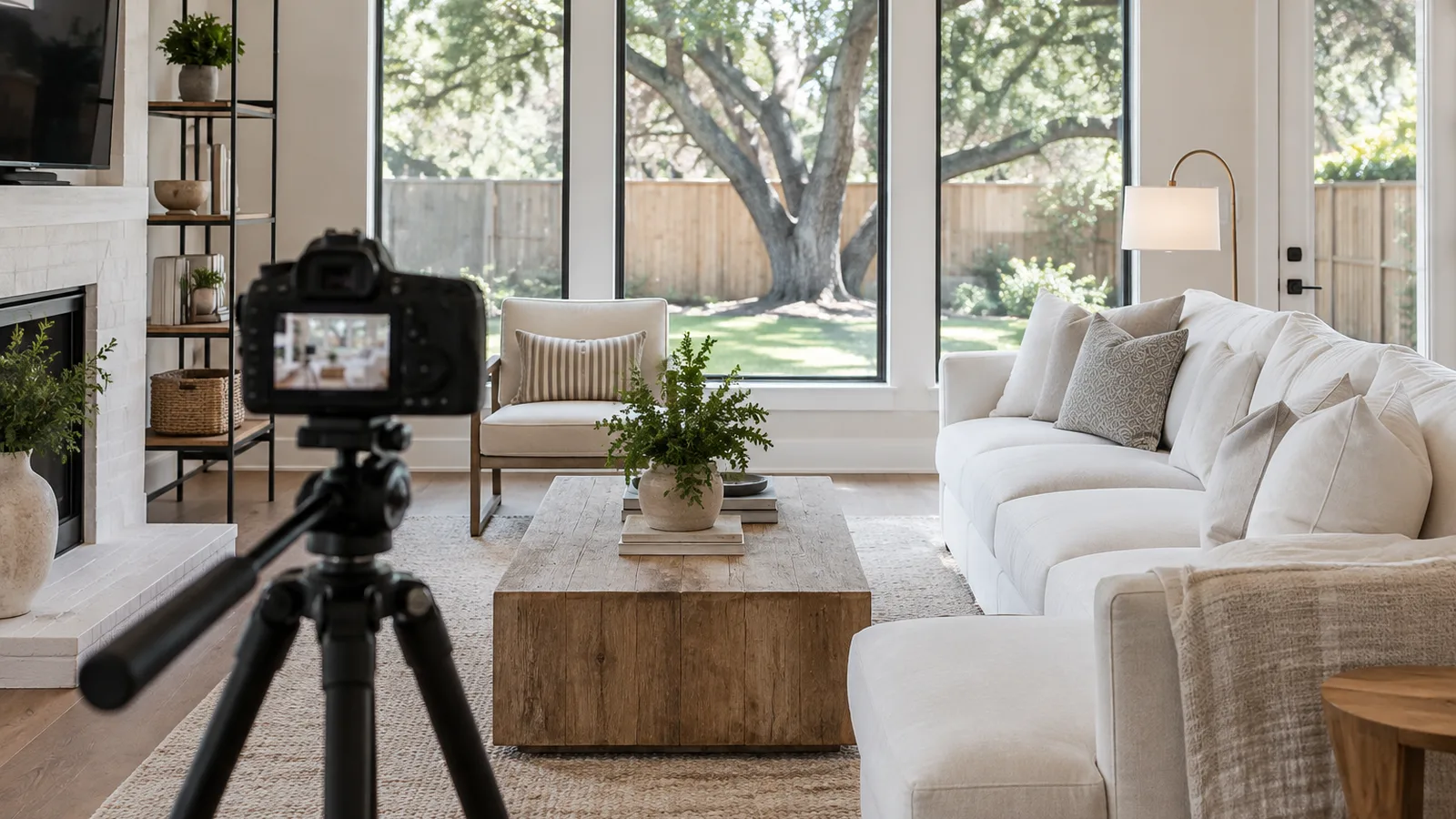
Research and analysis by Humberto Marquez, Founder of Surge
Every Airbnb host has heard that better photos lead to more bookings. Very few have seen numbers behind it. So we ran the numbers. We studied 3,103 whole-home Airbnb listings, scored the photos on each one, and compared revenue across similar homes. The short answer: homes with professional-quality photos earned 23% more revenue than similar homes with amateur photos, and the gain showed up at every price point, not just for luxury homes.
This article walks through what we found, how we measured it, what actually moves revenue (and what does not), and then turns the findings into practical Airbnb photography tips you can use before your next shoot. If you want the one-page version, you can download the study PDF here. No email required.
The headline results
- +23% revenue for homes with professional-quality photos vs similar homes with amateur-quality photos.
- +31% revenue for listings in the top quarter of photo quality vs the bottom quarter.
- 57% of the whole-home listings we studied still use amateur-quality photos.
- 35 vs 25 photos. The median top-quartile listing shows about 35 photos. The median bottom-quartile listing shows about 25.
The part most hosts do not expect is how broad the gap is. It was not limited to big, expensive homes. In a crowded market where potential guests are scrolling search results on a phone, the listing that reads clearly in a single frame wins the click, and the click is where bookings start.
How we ran the study
We took 3,103 entire-home Airbnb listings from Surge market data (trailing 12 months, October 2026), each active at least 180 days with at least 3 reviews. The first five photos on every listing were scored for styling, lighting and image quality, the cover photo, and photo order, without knowledge of revenue. We then compared revenue across similar homes, controlling for location, size, amenities, reviews, availability, host portfolio size, and interior design quality. The full method and caveats are in the Methodology section below.
Revenue lift by revenue tier
A common assumption is that professional photography only pays off for big, expensive homes. The data says otherwise. Here is the lift from amateur to professional-quality photos, by how much a home earns per year:
| Home revenue | Lift | Per year, e.g. |
|---|---|---|
| Under $20K | +19% | $2,800 on $15K |
| $20K to $35K | +29% | $8,700 on $30K |
| $35K to $50K | +19% | $8,600 on $45K |
| $50K and up* | +28% | $16,800 on $60K |
*The $50K+ group is a smaller sample (102 homes), so that estimate carries wider uncertainty. Dollar examples apply each tier's measured lift to a round revenue figure. They are illustrations, not projections for your home.
The middle of the market stands out. Homes earning $20K to $35K a year saw the biggest percentage lift, and nearly half of the homes in that tier still use amateur-quality photos. Even at the low end, a difference of roughly $2,800 a year is more than the price of a professional photography session.
What moves revenue, and what does not
Not every photo upgrade pays. When we broke the photo score into its parts, four factors carried almost all of the effect, and several popular extras showed no measurable lift.
What moves revenue
- Styling and staging (the #1 driver). Decluttered surfaces, beds dressed with crisp linens and pillows, towels folded, lights on, personal items and random objects out of the frame. Styling was the single strongest part of the photo score. A room that looks guest-ready in the photo tells potential guests exactly what to expect.
- Lighting and image quality. Bright, balanced exposure, sharp focus, straight vertical lines, and windows that are not blown out to pure white. Dark, grainy, or tilted images were common problems in the bottom quarter.
- The cover photo. Your cover photo is your search thumbnail. It has to read instantly at phone size, while a guest is scrolling past dozens of other listings.
- Enough photos. Top listings show about 35 photos vs about 25 at the bottom. More complete coverage answers guest questions before they ask and builds trust.
What does not move revenue
- Twilight and dusk shots. About 9% of listings used them. No measurable revenue lift.
- Drone and aerial shots. No measurable revenue lift. They can still be useful for a waterfront or acreage home, but they are not what drives bookings.
- Text, logos, and collage graphics. No lift, and they clutter the thumbnail.
- Reshuffling photo order alone. Reordering weak photos barely moved revenue. Order helps guests understand the home, but it is not a substitute for better images.
The pattern is clear: the basics done well beat expensive extras. A clean, bright, well-styled living room photo is worth more than a sunset drone shot.
The cover photo: lead with your best interior
The living room was the most common cover photo in the study, used by nearly half of all listings (46%). A daytime front exterior was second. Listings that led with the exterior did not outperform listings that led with the living room. If anything they trended slightly lower, though that gap was not large enough to call statistically clear.
Our takeaway for the cover: pick the single most compelling space in the home, usually the main living area or a standout feature such as a pool, a view, or a hot tub, and make sure it reads in a small square. Before you commit, shrink the image to thumbnail size on your phone. If you cannot tell what the room is in two seconds, choose a different shot.
How many photos should an Airbnb listing have?
Aim for 30 or more. Among the listings we studied, the top photo quartile had a median of 35 photos and the bottom quartile had 25. More is not automatically better if the extra images are near-duplicate angles, a common problem we saw in weaker listings. The goal is completeness: every bedroom and bed, every bathroom, the kitchen, dining, workspace, outdoor areas, parking, and anything a guest would ask about, such as stairs or a hot tub.
The order guests decide in
Guests tend to decide in a predictable order, and your photo order should follow it. Reordering alone will not fix weak photos, but a logical sequence helps guests understand the layout fast:
- Living room. The main room sets the feel of the stay.
- Kitchen. Clean worktops and counters, appliances visible.
- Dining. Where the group gathers; show the table and chairs.
- Bedrooms and bathrooms. Every bedroom, with its bathroom right after when it has one.
- Other spaces and amenities. Workspace, game room, patio, balcony, pool, hot tub, fire pits, laundry.
- Exterior last. The front of the home, parking, and entrance close out the tour.
Airbnb also groups photos by room in the photo tour, so tag each image to the right space. That helps guests understand the layout and makes your listing look complete.
Want photos built from this data?
Surge Airbnb photography starts with research: we study the top-performing listings near your home, what guests book for, and which features to lead with, then build a custom shot list for your shoot. Packages are priced by home size, starting at $1,049.
Airbnb photography tips: how to put the findings to work
Whether you hire a professional photographer or take photos yourself, these tips follow directly from the study.
1. Style before you shoot
Styling was the biggest driver, and most of it costs nothing. Before the shoot, do a deep clean, clear counters and surfaces, remove personal items, toiletries, cables, and clutter, make every bed with crisp linens and pillows, fold towels, raise the blinds, and turn on every lamp. Put a few simple touches out: a plant, a bowl of fruit, a book on the coffee table. The home should look lived in but guest-ready, not empty and not crowded.
2. Get the light right
Shoot during the day when natural light is strongest, open every curtain to let natural light in, and turn on all interior lights so rooms feel warm and even. Avoid on-camera flash, which creates harsh shadows. A good photographer will blend exposures (HDR or flash blending) so the room is bright and the view through the windows still shows. Do not push editing too far: over editing with unnatural colors sets up guest disappointment at check-in.
3. Keep lines straight and angles natural
Use a tripod, shoot horizontally (landscape orientation), and keep the camera level at about chest height. Tilting the camera up or down skews walls and doorways. Shoot from a corner or doorway to show how the space connects. A wide angle lens helps capture a whole room, but very wide angle shots distort furniture and make rooms look bigger than they are. Guests notice, and it hurts trust.
4. Build a cover photo that reads as a thumbnail
Your cover photo is the first and often only image a guest sees in search results. Lead with your best interior space or a true standout feature. Check it at thumbnail size before you publish.
5. Show everything, then add detail shots
Plan 30 or more images: wide shots of every room first, then detail shots of what makes the stay special, like a coffee bar, a reading nook, the hot tub, or quality bedding. Each image should answer a question a guest would otherwise send you.
6. Skip the extras that do not pay
Twilight shots, drone images, and graphics with text or logos did not move revenue in our data. If your budget is limited, spend it on styling, lighting, and complete coverage first.
7. Can you use a phone?
A recent smartphone can take clear photos in good light, and the styling and composition tips above apply either way. The challenge is dynamic range (bright windows next to darker interiors), lens distortion, and consistency across 30+ images. That is where professional photography equipment and editing usually show the gap. Since 57% of listings still use amateur-quality photos, high quality photos remain one of the easiest ways to stand out.
8. Refresh photos when the home changes
New furniture, a renovated kitchen, a new pool, or a seasonal change in the yard all justify an update. Outdated photos that no longer match the home lead to lower ratings, which feed back into future bookings.
Methodology
Data source and sample
The data comes from Surge market data, trailing 12 months, October 2026. We started from whole-home Airbnb listings and kept only those that were active for at least 180 days in that window and had at least 3 reviews. That removes brand-new listings and homes that sit mostly blocked. The final sample is 3,103 entire-home listings.
How the photos were scored
For each listing, the first five photos (the ones guests see in search and at the top of the listing) were scored on a consistent rubric: styling, lighting and image quality, the cover photo, and photo order. Scoring was done without any knowledge of the home's revenue. Listings were then grouped into professional-quality vs amateur-quality photos, and into quarters by overall photo score.
Controls
We compared revenue across similar homes, controlling for:
- submarket (location)
- bedrooms, bathrooms, and guest count
- amenities
- guest rating and review count
- days available on the calendar
- host portfolio size
- interior design quality
That last control matters. Nice homes tend to have nice photos, so we separated the quality of the photos from the quality of the furniture and finishes as best we could. The photo effect held up after accounting for design.
Where the revenue gap shows up
We also split the 23% gap into its parts. Nightly rate (ADR) was essentially the same for professional-quality and amateur-quality listings (+0.5%, not statistically significant). Booked nights were about 12% higher on average. The rest of the gap shows up in reported revenue but is not explained by nightly rate or booked nights in the data, so we do not attribute it to any single guest behavior. The revenue figures in this study are measured revenue, not a sum of rate times nights.
Caveats
This is an association, not a guarantee. We compared similar homes and controlled for the factors that drive Airbnb revenue, but this was not a controlled experiment. Well-run listings tend to invest in photos and in everything else, from pricing to guest communication, and no model captures every difference between homes. The $50K+ revenue tier is a small sample (102 homes), so its estimate is less certain. Your results will depend on your home, your market, your pricing, your reviews, and how the listing is managed.
The bottom line
Across 3,103 whole-home listings, professional-quality photos were consistently linked to more revenue at every price point, and the factors behind that link are ones an owner can act on: styling, light, a cover photo that reads in search, and enough photos to answer every guest question. It is an association, not a promise, but it is a strong one.
Frequently asked questions
Do professional photos increase Airbnb bookings?
In our study of 3,103 whole-home listings, homes with professional-quality photos earned 23% more revenue than similar homes with amateur photos. That is an association across similar homes, not a guarantee for any single listing.
Are professional photos worth it for an Airbnb?
The data points that way at every price point we measured. Even homes earning under $20K a year showed a lift of about 19%, roughly $2,800 a year on a $15K home, which is more than the price of a typical professional photography session. It is an association, not a guarantee, and your results will vary with your home and market.
What is the most important Airbnb photo?
The cover photo, because it is your thumbnail in search results. Lead with your most compelling interior space or standout feature and make sure it reads at phone size.
Do twilight or drone photos help an Airbnb listing?
Not in our data. Twilight and dusk shots, drone and aerial images, and text or collage graphics showed no measurable revenue lift. Styling, lighting, the cover photo, and enough photos mattered far more.
What order should Airbnb photos go in?
Living room, kitchen, dining, bedrooms and bathrooms, other spaces and amenities, and the exterior last. That follows the order guests decide in. Reordering weak photos alone barely moves revenue, so fix quality first.
Get your listing photographed by Surge
Surge manages short-term rentals for owners in Texas and Florida, and we built our photography service around the same data in this study. Every shoot starts with market research, a custom shot list, and a prep checklist so the home is camera-ready. See Surge Airbnb photography packages and book a session, or call us at (888) 616-8149.
Want to share the study? Download the one-page Surge Airbnb Photo Study (PDF).

Written by
Humberto MarquezFounder, Surge
Founder of Surge and licensed Texas real estate broker. Manages short-term rentals across 12 U.S. markets and invests in STRs himself. Quoted in Martha Stewart, Yahoo Finance, Realtor.com, Bob Vila.
More about Humberto →See what your property could earn with Surge
Full-service short term rental management across Texas and Florida. Get a free property assessment and revenue estimate, no commitment.