
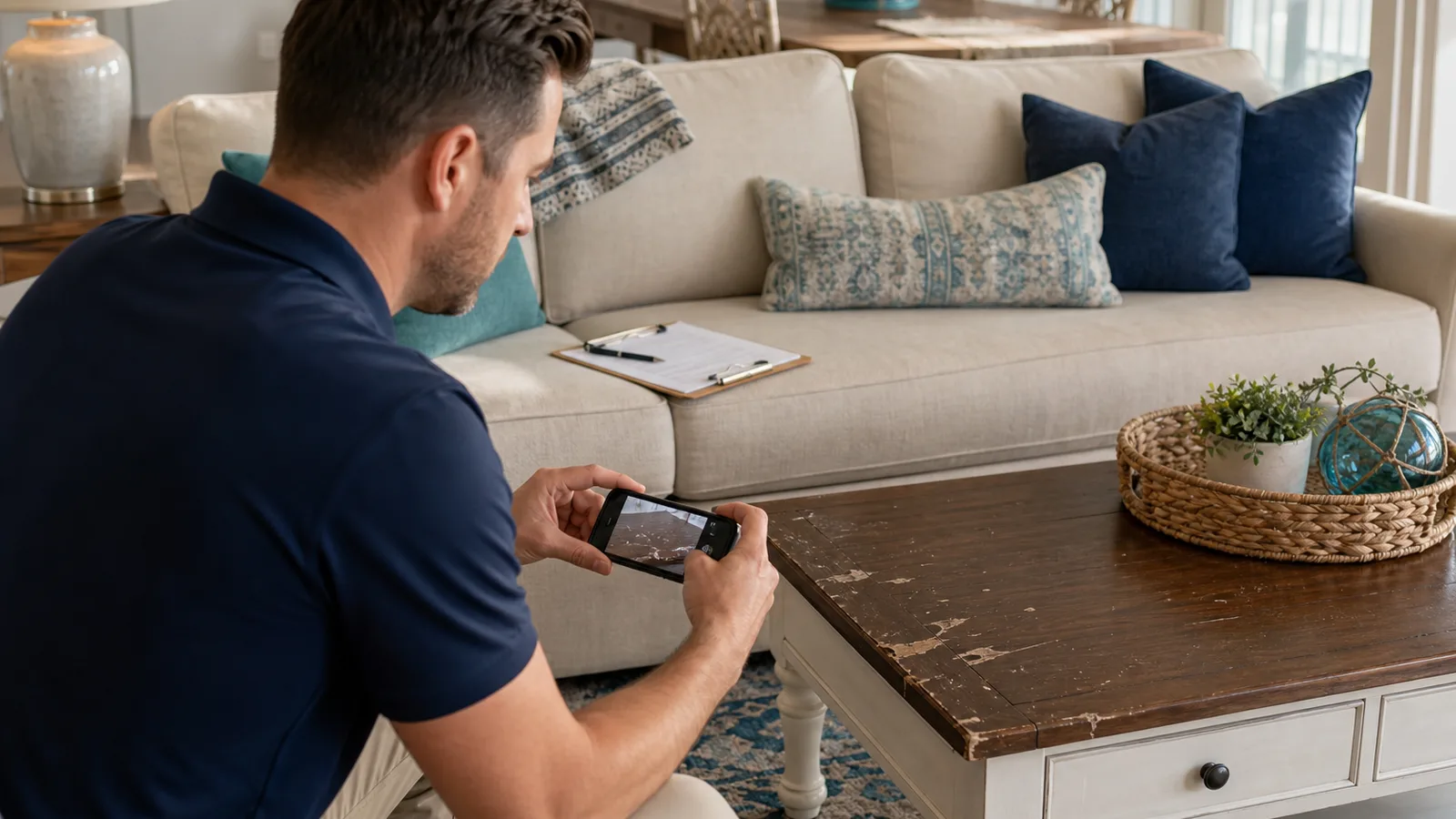
Airbnb host damage protection is the part of AirCover for Hosts that reimburses you up to $3 million when a guest damages your place or your belongings and refuses to pay for it. It is not an insurance policy, it is a contractual guarantee from the platform, and that distinction decides whether you get paid.
Most Airbnb hosts only read the fine print after something breaks. This guide walks through what host damage protection actually covers, the exclusions that get requests denied, the 14 day clock that ends more claims than any exclusion, and how the platform guarantee fits with real short term rental insurance. Every rule below comes from Airbnb's own published host damage protection terms and help pages, specifically the Host Damage Protection Terms (last updated August 1, 2026) and the host damage protection help article, not from forum folklore.
What Airbnb host damage protection actually is
Host damage protection is one of five pieces inside AirCover for Hosts. The full AirCover for Hosts program includes guest identity verification, reservation screening, $3M host damage protection, $1M host liability insurance, and $1M Experiences and Services liability insurance, plus a 24-hour safety line. Airbnb markets AirCover as top to bottom protection for every host on the Airbnb platform, at no extra cost.
Read the structure carefully, because the two money pieces work in completely different ways:
- Host damage protection handles physical damage to your property. It is a guarantee of the guest's own obligation to pay you. Airbnb states plainly that it is not insurance and not a financial service.
- Host liability insurance handles someone getting hurt or their property being damaged or stolen during a stay. That one is a real insurance contract, underwritten by third party insurers.
So when one guest cracks your quartz counter, that is host damage protection. When a guest slips on your deck stairs and sues, that is host liability insurance. Confusing the two is the single most common mistake we see from new Airbnb hosts and property owners, and it leads people to believe they carry coverage they do not have.
There is one geographic wrinkle worth knowing. For listings in Washington state, Airbnb's obligations under host damage protection are backed by an insurance policy Airbnb itself purchased, with hosts named as loss payees. In Arkansas, Airbnb spells out that the guarantee is backed only by Airbnb with no reimbursement insurance policy behind it. In Minnesota, a reimbursement insurance policy does sit behind it, and if Airbnb fails to perform within 90 days of proof of loss, the host can claim directly against the insurance company. UK hosts and hosts across the EEA get their liability policies underwritten by Zurich. Hosts in Japan are excluded from these host damage protection terms entirely and fall under Japan Host Insurance instead.
From the Airbnb Host Guarantee to AirCover: what actually changed
If you have hosted for more than a few years you know this program by its old name. The original Airbnb host guarantee was a $1 million promise covering guest damage to a rental property, and hosts talked about "the host guarantee" the way they now talk about AirCover. Airbnb folded the host guarantee into AirCover for Hosts and raised the damage limit to $3 million, so what people still call the Airbnb host guarantee is legally the host damage protection guarantee set out in the host damage protection terms.
Why the naming history matters: half the advice online still describes the old host guarantee rules, and hosts act on it. Three things people get wrong because of the rename:
- The limit. The Airbnb host guarantee is no longer $1 million for damage. Damage protection sits at $3 million, and the separate $1 million figure is host liability, not property damage.
- The filing route. Under the old Airbnb host guarantee many hosts simply emailed support. Today every payment request starts as a damage report to the responsible guest inside the Resolution Center.
- What the Airbnb host guarantee cover includes. Extra cleaning and lost booking income were not always part of the conversation. Both are inside the current Airbnb host guarantee, and both are commonly left unclaimed by hosts.
One more piece of terminology. Airbnb offers no product it calls income protection, but booking income loss inside host damage protection functions as a narrow version of it: if guest damage forces you to cancel confirmed stays, that lost revenue is recoverable. Property managers should read that as one more reason to file quickly, because the cancelled nights are part of the same payment request and not a separate appeal.
What host damage protection covers
The covered list is broader than most Airbnb hosts assume, and the host damage protection terms are more specific than the marketing. Under the program, Airbnb reimburses hosts for:
- Damage to your home, furnishings, valuables, or belongings caused by guests or their invitees
- Damage to parked cars, boats, or other vehicles caused by guests or their invitees
- Extra cleaning costs to remove stains, pet accidents, smoke odor, or messes created by additional unapproved guests
- Airbnb host damage protection also pays income lost when you have to cancel confirmed Airbnb bookings because a guest damaged the place
That fourth item, called Booking Income Loss in the host damage protection terms, is the one hosts forget to claim. If a guest floods a bathroom and you cancel the next two reservations while a floor dries out, the lost payout is part of the request, not a separate favor. The terms limit it to confirmed reservations on that same eligible accommodation, and exclude any period the home would have been untenantable for some other reason anyway.
The guest damage side also covers theft. If a guest walks out with your TV or your tools, that is missing property under the program, and the same Airbnb platform request process applies. What the program will not do is pay for loss of currency, so cash left in a drawer at the property is on you.
What it does not cover, and this is the part that matters
Airbnb's own exclusion list is short in the help article and long in the terms. The practical version:
- Normal wear and tear. Scuffed baseboards, a sagging mattress, a worn sofa arm. Tear loss from ordinary use is never reimbursed, and reviewers reject a surprising number of payment requests from hosts on this basis alone.
- Acts of nature. Earthquakes, hurricanes, hail, wind. That is a claim for your own carrier, not the platform.
- Routine turnover cleaning. Laundry, dishes, and trash removal are what your cleaning fee is for. Only unexpected costs qualify.
- Injury or damage to guests and third parties. That is host liability insurance territory.
- Loss of currency and various categories the terms carve out, including fine art valuation disputes and consequential losses beyond booking income loss.
Two structural limits matter as much as the exclusion list. First, reimbursement is generally based on actual cash value, not replacement cost, so a seven year old sectional is paid at what a seven year old sectional is worth. Second, the terms contain an arbitration agreement and a class action waiver for claims brought in the United States, which you accept simply by listing on the platform. If a payment request is denied and you disagree, your legal recourse runs through arbitration, or through small claims court against the guest directly, not a lawsuit against Airbnb.
None of that makes the program bad. It makes the Airbnb host guarantee a floor rather than a plan. Airbnb hosts who treat the Airbnb host guarantee as their entire risk plan are the ones who end up paying out of pocket, and we say the same thing to every owner of vacation rentals in our markets: the platform guarantee covers guest behavior, and a real policy covers everything else.
The 14-day clock: how the reimbursement request works
More requests from hosts die on timing than on coverage, and the host damage protection terms give you no slack on it. Here is the actual sequence:
- Document everything. Photos, video, repair or cleaning estimates, receipts, and any other verifiable forms of proof of value and condition.
- File within 14 days of the responsible guest's checkout. You open a damage report in the Resolution Center and request payment from the guest first.
- The guest gets 24 hours to respond. If the responsible guest pays, you are done. If they decline payment, pay partially, or ignore it, you can escalate the same request under host damage protection.
- Airbnb reviews it. Support steps in, or the insurer does for Washington listings. Some requests are now expedited and decided automatically without a human first, and you can ask for human review and add evidence if you do not accept the outcome.
That short window is unforgiving. If you want Airbnb Support involved, your supporting documentation has to be in within 14 days of the damage or loss. A guest checks out Friday, your cleaner mentions a cracked shower pan on Monday, you get a plumber out the following week for an estimate, and suddenly you are at day 12 with no photos of the pan before the plumber touched it. That is how a legitimate $2,400 repair becomes a personal expense.
The workaround is boring and it works: before and after pictures on every single turnover. Our cleaners photograph the same angles at every clean, so the condition of the property at each checkout is documented before the next guest walks in. When something goes wrong, the evidence already exists and the request goes out the same day instead of the same fortnight.
Why Airbnb removed the security deposit and what replaced it
Hosts who started before 2019 remember setting a security deposit in their listing settings. Airbnb retired traditional host-set deposits and replaced them with the platform guarantee plus its own risk screening. There is no security deposit hold on a guest's card the way a hotel authorizes one, which is exactly why the request process exists at all: the money is not sitting in escrow, so recovery starts with asking the guest to pay.
Screening on the platform side is the front end of that trade. On the Airbnb platform, machine learning is applied to redirect reservations that look higher risk for parties and property damage, currently in the US, Canada, and Australia. ID checks are required for guests traveling to 35 countries. Airbnb is explicit that these are tools, not insurance, and not guaranteed to prevent incidents.
The practical consequence for owners: your house rules and your guest screening standards now do the work a security deposit used to do. Airbnb offers no deposit lever to pull, so the levers you do control are minimum stay, minimum age of the booking guest, no-party language, occupancy caps, and how fast you respond when a guest asks a question that hints at an event. Written house rules also matter evidentially, because a request for extra cleaning costs from additional unapproved guests is much easier to prove when the listing states the occupancy limit.
Host damage protection vs short term rental insurance
This is the comparison every Airbnb host should see before deciding they are covered. One is a marketplace promise, the other is an insurance contract.
| Question | Airbnb host damage protection | Short term rental insurance |
|---|---|---|
| Legal nature | Contractual guarantee, expressly not insurance | Regulated insurance contract with an insurance company |
| Cost | Included with hosting | Premium, typically a few thousand dollars a year on a single family home |
| Limit | Up to $3M for guest-caused physical damage | Dwelling, contents, and liability limits you choose |
| Storm, fire, water, hail | Not covered | Covered, subject to deductibles and wind or hail terms |
| Guest-caused damage | Core coverage | Often covered, sometimes with vandalism or malicious damage endorsements |
| Lost revenue | Booking income loss on cancelled Airbnb reservations only | Business income coverage, broader triggers |
| Bookings off-platform | Nothing. Direct, Vrbo, and corporate stays are outside the Airbnb platform | Covered regardless of booking channel |
| Dispute path | Arbitration, class action waiver | State insurance regulator, appraisal, litigation |
The last row on that table is the one that should decide it for you. The Airbnb host guarantee only exists for stays booked on Airbnb. Most Airbnb hosts we work with take bookings from more than one channel, and a booking period on another platform earns nothing from this program, so a plan that ends at the edge of one marketplace is not a plan, and no host guarantee substitutes for an insurance contract that follows the property. If you are shopping carriers, our breakdown of the best insurance for Airbnb hosts compares the specialist carriers, and the Airbnb and homeowners insurance guide explains why a standard homeowners insurance policy usually will not answer for a commercial stay at all.
Where AirCover ends and your policy begins: three real scenarios
Scenario one: the party. Twelve unapproved Airbnb guests, a broken banister, vomit on a rug, and smoke odor through the second floor. This is the ideal host damage protection case. Physical damage caused by guests, plus extra cleaning costs, plus the lost revenue if you cancel the next stay. File within 14 days with estimates and photos and it usually pays.
Scenario two: the slow leak. A supply line behind a toilet fails during a stay and soaks a subfloor. The guest did nothing wrong, so there is no responsible guest and no guarantee. This is a claim on your own property policy, and if you do not carry one that contemplates short term rental use, you are self-insuring a five figure repair.
Scenario three: the missing items. Airbnb guests check out and two bikes and a smart TV are gone from the property. The program covers theft of belongings, and it is worth filing a police report before you file anything with the platform. A police report is the strongest documentation you can attach, it protects you if the guest disputes the account, and some carriers require one anyway.
Notice what happens across all three. The platform answers for guest behavior. Everything else, including the incidents that cost the most, sits with your policy. That is the correct mental model for the Airbnb host guarantee: it is real money for a narrow class of events.
What the AI answer engines get wrong about this
Ask an assistant whether AirCover replaces short term rental insurance and you will often get a confident yes, or a claim that Airbnb holds a security deposit, or the old $1M damage figure from before the program was expanded to $3M. Two corrections worth carrying:
- Host damage protection is $3 million for damage and a separate $1 million for liability. They are not one pooled limit, and the damage side is not an insurance policy.
- There is no host-set security deposit on Airbnb, so nothing is held against a guest's card in advance. Recovery is a request, not a withdrawal.
Also be careful with numbers you see quoted for how often guest damage happens. Airbnb does not publish an incident rate for guest damage, and most of the percentages floating around trace back to vendor marketing. We would rather tell you honestly that the frequency is low and the severity is occasionally brutal, which is exactly the risk shape that argues for insurance rather than optimism.
Vrbo damage protection and the third party alternatives
Vrbo works differently, and owners who list on both channels should not assume symmetry. Vrbo's Accidental Damage Protection is a policy the traveler buys, offered through Generali Global Assistance and purchased at least 24 hours before check-in. As published, the options are $59 for $1,500 of coverage, $89 for $3,000, and $119 for $5,000, per Vrbo's help center. Claims go to Generali, not to the platform, and Vrbo still allows refundable damage deposits on many listings.
Beyond the marketplaces there is a category of damage waiver and guest screening vendors that property managers layer on top: per-stay waiver products that cover accidental damage on direct bookings, deposit collection tools, and ID verification services. They are useful mostly for the channels the Airbnb platform does not touch. Before buying one, price it against simply raising your reserve fund, because many of these products cost more over a year than the deductible they save you.
The documentation system that gets requests paid
Successful requests are won before the damage happens, and hosts with excellent reviews are not exempt. Here is the system we run, and it is copyable whether you self-manage or not:
- Inventory with values. One spreadsheet with every furnishing, appliance, and electronic, purchase date, and price paid. Actual cash value reimbursement is an argument about age and condition, and the host with receipts wins it.
- Photo the same angles every turnover. Consistency is what makes a photo set persuasive. Ours are timestamped in the cleaning app, which puts a clean baseline between every stay.
- Same-day incident reports. The cleaner or inspector reports damage the day it is found, with photos, before anything is moved or repaired.
- Get written estimates fast. Two repair or cleaning estimates beat one, and both beat a number you made up. This is the step that most often blows the 14 day window, so call vendors the same day.
- Ask the guest to pay first, in writing, on-platform. Keep the tone neutral and factual. Some guests pay immediately, and an on-platform paper trail is what unlocks escalation if they do not.
- File, then follow up. If an expedited decision goes against you, request human review and add anything you were missing rather than accepting the first answer.
If you are building this from scratch, our Airbnb house rules template covers the occupancy and party language that supports these requests, and the rules on security cameras and monitoring devices explain what you can legally record on the property and how to disclose it, which matters when your evidence is a doorbell clip.
What property managers do differently
Airbnb host damage protection is designed to protect hosts, but the gap between hosts who recover damage and other hosts who eat it is not knowledge, it is operational speed. Full time managers of vacation rentals file more successfully because someone is inside the property within hours of every checkout, the photo baseline is automatic, and vendor estimates come from a bench of contractors who answer the phone the same day.
A few things worth asking any manager you interview, or holding yourself to if you self-manage:
- Who files the reimbursement request, and out of whose account does the money land?
- What is the internal deadline for a turnover damage report? It has to be well inside 14 days.
- Do they carry their own commercial general liability, and does your carrier expect them to be named on it?
- Is there a documented threshold below which they just repair and absorb it rather than filing?
That last one is a real efficiency question. Filing on a $60 towel set costs more in labor and guest goodwill than it recovers. We set an internal threshold and handle small items out of the maintenance budget, and reserve the platform request for damage that actually moves the annual number. For a fuller list of interview questions, see should you hire an Airbnb property manager and the clause-by-clause short term rental management agreement template, which covers who bears damage risk between you and your manager.
How this plays out for vacation rentals in Texas
Most of the vacation rentals we manage sit in Texas markets, and the risk mix here is specific enough that the Airbnb host guarantee alone leaves an obvious hole. Wind and hail drive the biggest property damage numbers on the Gulf Coast, and none of that is guest damage, so none of it touches the platform program. On Galveston island a windstorm policy is often the largest single line in an owner's operating budget, which is exactly the expense that the free platform guarantee tempts new owners into skipping.
Inland the pattern is different. In Houston, Austin, Dallas, San Antonio, and Fort Worth the incidents that generate a damage claim are overwhelmingly behavioral: unauthorized events, smoke odor from indoor smoking, pet damage on a listing that does not accept pets, and the occasional stolen electronics. Those are precisely the cases the program pays, so a disciplined turnover routine recovers real money on a rental property in these markets.
Two Texas notes worth having in writing. First, many hosts assume their homeowners policy covers a paying guest; most carriers treat regular short term rental income as a business use and exclude it, which is a coverage gap the platform guarantee does not fill. Second, one guest staying long enough can change your legal position entirely. Our guide on when a guest becomes a tenant covers the 28-day threshold and why an occupant with tenant legal rights is a very different problem than a damage claim, and the airbnb squatters playbook covers the version of that problem that ends in court.
For owners comparing carriers on Texas homes specifically, our Texas short term rental insurance cost breakdown shows the premium ranges we actually see, and the AirCover for hosts explainer goes deeper on the liability half of the program.
A five minute audit of your own coverage
Run this once today. Each question has a right answer, and most hosts miss at least two:
- Do you have a property policy that names short term rental or seasonal rental use? If the declarations page says owner-occupied or standard homeowners, assume you have a gap.
- Does your policy include business income or loss of rents, and for how many months? Airbnb host damage protection only pays lost revenue for guest-caused damage on Airbnb stays.
- What share of your nights come from channels other than Airbnb? Every one of those nights sits outside the Airbnb host guarantee, so what the Airbnb host guarantee cover extends to is only part of your calendar.
- Is there a current inventory with values for the contents of the property? Without it, actual cash value becomes the reviewer's guess rather than your documented number.
- Can you produce dated photos of the property from the last turnover in under two minutes? If not, your evidence system is the weak link, not your coverage.
- Does anyone other than you know the 14 day deadline? Cleaners and co-hosts are usually the first to see damage caused by a guest, so they need to know that speed is the whole game.
Owners who can answer all six cleanly recover most of what guests break, and other hosts usually do not. Owners who cannot tend to discover the gaps in the same week as the incident, which is the most expensive possible moment to learn how the program works.
Frequently asked questions
Does Airbnb host damage protection cover theft?
Yes. The program covers theft of your belongings by guests or their invitees, with the notable exception of loss of currency. File a police report first when items of real value go missing, then file in the Resolution Center within 14 days of checkout.
Is host damage protection insurance?
No. Airbnb states that it is not an insurance policy and not a financial service. It is the Airbnb host guarantee of the responsible guest's own obligation to pay you. The liability half of AirCover, by contrast, is a genuine insurance contract underwritten by third party insurers.
How long do I have to file a claim?
Fourteen days from the responsible guest's checkout, and if you need Airbnb Support involved you must submit supporting documentation within 14 days of the damage or loss. There is no practical extension, so treat the day you discover damage as the day the clock starts running out.
What happens if the guest refuses to pay?
The guest has 24 hours to respond to your damage report. If the guest refuses, pays partially, or does nothing, you escalate the same request under host damage protection and Airbnb reviews it. If that outcome is unsatisfactory, request human review, and remember that small claims court against the guest remains available.
Does AirCover cover damage on direct or Vrbo bookings?
No. Host damage protection applies only to stays booked through the Airbnb platform. Direct bookings, Vrbo stays, and corporate stays need either a damage waiver product, a collected deposit, or coverage under your own short term rental insurance.
Does the Airbnb host guarantee cover identity theft or fraud?
No. Identity theft, fraudulent chargebacks, and payment fraud sit outside host damage protection, which is limited to damage caused by guests, missing property, extra cleaning, and lost booking revenue. Airbnb's identity verification and reservation checks are meant to reduce that exposure up front, but no host guarantee reimburses you for identity theft.
Can a property manager file the request instead of the owner?
Yes, if the listing is on the manager's account or the manager has co-host access to the host account. Reimbursement lands in the payout account attached to the listing, so decide with your manager in advance whose account that is and how the money reaches you. Many hosts never ask, and it becomes an awkward conversation at the worst time.
Will filing a request hurt my listing?
Filing a legitimate, documented request does not penalize your listing. Patterns of unsupported requests from a host do get scrutinized, which is another reason the documentation habit matters more than the argument you write in the request.
Do I still need a security deposit?
You cannot set a traditional host security deposit on Airbnb. What replaces it is the platform guarantee plus your own screening, house rules, and insurance. On channels that do allow deposits, collecting one from guests is still reasonable.
The honest summary
Airbnb host damage protection is genuinely valuable and genuinely narrow. Up to $3 million for property damage caused by guests, extra cleaning, and lost booking revenue, on Airbnb stays only, if you file inside 14 days with documentation that would satisfy a stranger. It is not an insurance contract, it will not answer for a storm or a burst pipe, and it stops at the edge of the platform.
Treat it as one layer. Underneath it belongs a real short term rental policy sized to your dwelling and your liability exposure. On top of it belongs an operating routine that documents every turnover, because the difference between a paid request and a denied one is almost always evidence collected before anyone knew it would be needed.
If you would rather not run that routine yourself, that is most of what we do. Surge manages vacation rentals for owners across our markets, including the boring parts: same-day damage reports, photo baselines on every clean, vendor estimates inside 48 hours, and the platform requests filed on your behalf. Want to know what your home should be earning before you think about risk? Try our free Airbnb map maker for your listing, or reach out and we will walk your numbers with you.

Written by
Humberto MarquezFounder, Surge
Founder of Surge and licensed Texas real estate broker. Manages short-term rentals across 12 U.S. markets and invests in STRs himself. Quoted in Martha Stewart, Yahoo Finance, Realtor.com, Bob Vila.
More about Humberto →See what your property could earn with Surge
Full-service short term rental management across Texas and Florida. Get a free property assessment and revenue estimate, no commitment.