
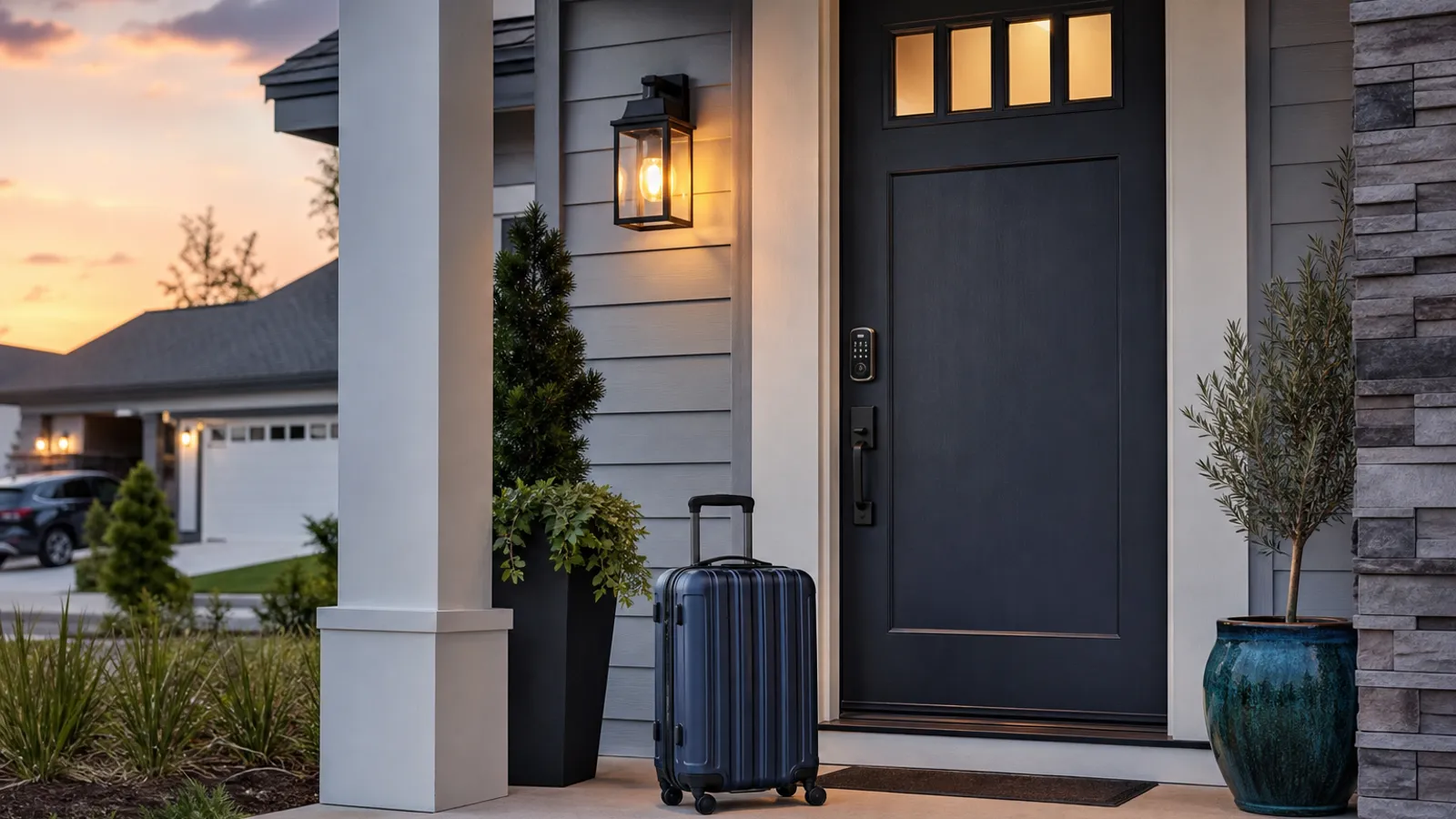
Airbnb squatters are guests who refuse to leave when their reservation ends, or occupants who exploit local laws to stay in a property without paying. Stories like this make owners nervous about short term rentals. Incidents are rare, but the downside is brutal: a blocked calendar, thousands in legal fees, and weeks or months of a formal eviction process before you get your property back. This guide explains what Airbnb squatters are, when a guest can claim tenant rights, what Texas law changed in 2025, and the prevention system we use at Surge so short term rental owners almost never face this problem in the first place.
What are Airbnb squatters?
Airbnb squatters are guests who overstay a reservation and either refuse to leave or assert a legal right to remain. That is different from a guest who texts to ask for a late checkout. The problem starts when a guest refuses to vacate, stops communicating, or actively claims to be a tenant. Airbnb squatters are guests, at least on paper: they arrive through the normal booking process, then weaponize the law once they are inside. Short term rentals are uniquely exposed because strangers get keys by design.
In most states, the law splits occupants into two categories:
- A guest (licensee) has permission to occupy the property for a defined booking period. When that reservation period ends, the host can generally require immediate departure.
- A tenant has acquired occupancy rights, through a lease, an oral agreement, or in many jurisdictions simply by staying long enough. Removing a tenant requires notice and a court order.
The danger for Airbnb hosts is the moment a guest can plausibly claim tenant rights. Once that claim exists, police often treat the standoff as a civil matter, and you cannot simply change the locks. Squatters can claim tenant rights without any rental agreement at all, and a guest who stopped paying can still stall for weeks inside your short term rental property while the legal process plays out, blocking other reservations on your calendar.
One more distinction worth clearing up: this is not adverse possession. Adverse possession laws let someone claim actual title to real estate after years of open, continuous occupation without the property owner's permission (in Texas, typically 10 or more years, per the Texas State Law Library). What hosts actually face is a much faster problem: tenant protections that can attach in about 30 days. Headlines say squatters rights; the real mechanism is landlord tenant law.
When can an Airbnb guest claim tenant rights?
These laws exist to protect vulnerable tenants from wrongful lockouts; the side effect is that a bad actor in short term rentals can hide behind the same tenant rights. Length of stay is the critical factor, and the rules vary significantly by state. Common patterns:
- California and New York: 30 or more consecutive days of occupancy can create a residential tenancy even without a written lease. Once that happens, removal means a formal unlawful detainer case; the California courts' eviction guide walks through how long that process takes.
- Texas: there is no automatic day count. Courts look at the facts: payment patterns, mail at the property, how long the guest's stay ran, and whether the occupant was treated like a tenant. Accepting money after the checkout date is the classic mistake that strengthens a tenancy claim.
- Many jurisdictions treat roughly 30 days as the line where a transient guest starts looking like a tenant.
We published a full state-by-state breakdown in our guide to when a guest becomes a tenant. The practical rule for every Airbnb host: know your local laws before you accept any stay approaching 28 to 30 nights, because crossing that threshold changes the entire legal process required to remove someone.
Texas changed the math in 2025: SB 1333 and Property Code Chapter 24B
Texas gave property owners a genuinely useful new tool. Senate Bill 1333, effective September 1, 2025, added Chapter 24B to the Texas Property Code. Under it, an owner of residential real property (or the owner's agent, which includes a property management company) can submit a sworn complaint to the county sheriff or constable requesting immediate removal of a person who unlawfully entered and is occupying a dwelling without the owner's consent. No eviction lawsuit, no waiting for a docket.
The same bill created new criminal offenses: an illegal tenant waving a forged lease is now committing a Class A misdemeanor, and fraudulently renting out property you do not own is a first degree felony (full bill text). The Texas Tribune covered the legislative fight over how far the removal power should reach.
Now the important caveat for short term rentals: Chapter 24B targets true squatters, people who broke in or moved in with no permission. It does not apply to a current or former tenant under an oral or written lease, and a holdover Airbnb guest entered with your consent. If your overstaying guest can credibly claim any tenancy, you are still in the notice-and-eviction lane. The sworn complaint also carries teeth in both directions: file one falsely and you are liable for actual damages, exemplary damages, and attorney's fees. This is exactly the kind of judgment call where a local attorney earns their fee.
Early warning signs of a potential guest who plans to overstay
Most squatter situations are preventable before check in. Here is what we flag when evaluating a potential guest:
- Profile red flags. Brand new accounts with no positive reviews, incomplete profiles, or a booking name that does not match the ID. Only accept bookings from guests with verified ID.
- Suspicious booking patterns. Last-minute requests for month-long stays, pressure to pay off-platform, or a booking period that lands suspiciously close to 28 to 30 nights.
- Communication red flags. A guest who will not answer direct questions about the purpose of the visit or the number of occupants. Vague answers before check in are a warning sign, and so is pressure to rush the booking process.
- Behavioral clues. Asking whether mail can be delivered, talking about moving in, or referencing the property as a potential home. Those are not normal behaviors between booking and check in.
If a booking feels wrong, decline it. Protecting the rental property matters more than filling one week on the calendar.
Prevention playbook: policies for Airbnb hosts and direct bookings
Prevention is cheaper, faster, and far less stressful than dealing with an active overstay. The core policies:
- Cap stay length. Most short term rentals never need stays past 28 nights. Where your market allows, keep maximum bookings under the tenancy threshold. In 30-day states, capping at 27 or 28 nights keeps you safely below the line. Longer stays can be worth it, but treat them as a different product with different paperwork.
- Use a vacation rental contract for longer stays. For anything beyond two weeks, require a signed short-term rental agreement stating the exact reservation dates, occupancy limits, and that the stay creates no tenancy. A signed rental agreement will not override state law by itself, but it dramatically strengthens your legal standing in court.
- Collect security deposits. Security deposits deter Airbnb squatters and other bad actors and give you a financial cushion. Charge them through the platform where available, or through your own payment system for direct bookings. A deposit requirement alone filters out many unwanted guests, and security deposits give you leverage in a damage dispute.
- Standardize house rules and guest communication. Clear house rules, a written house manual, and every message in writing. Documentation gaps are exactly what a bad actor exploits.
Guest screening and guest communication: your first line of defense
Screening is where nearly every squatter situation in short term rentals is stopped, before the guest ever gets a door code.
- Use platform verification, then go further. Airbnb's verified ID and payment checks are a floor, not a ceiling. For direct bookings, match the ID to the payment card name and consider third-party guest verification for stays over two weeks.
- Read prior reviews between the lines. "Communication was challenging" and "had difficulty following house rules" are coded warnings from previous hosts.
- Ask direct questions. Purpose of the visit, names of all occupants, whether anyone lives locally. Honest guests answer direct questions easily; evasive ones filter themselves out. Treat every Airbnb guest the same way: the guest who screens clean books again, and the guest who balks was never worth the risk.
We wrote a full Texas guest screening guide covering the criteria we apply to every booking. The key is consistency: at Surge, the same documented screening standards run on every reservation across our markets, so nothing slips through because an owner was busy or traveling.
Entry lock system and smart locks: shrink the window for an overstay
Technology cannot evict anyone, but it can shrink the opportunity. Most professionally run short term rentals already have the hardware. The foundation is an entry lock system built on smart locks that issue unique, time limited access codes tied to each reservation. When the guest's stay ends, the code expires automatically, and cleaner codes are issued separately.
Pair that with a legal exterior camera on the entrance and you know within hours, not days, whether activity continues past the checkout date. Speed matters: immediate action on day one of an overstay is a very different problem than discovering it on day twelve.
One hard boundary: if an occupant has already claimed tenant status, do not expire their code or cut utilities once tenancy rights are claimed. At that point a lockout is an illegal self-help eviction in nearly every state. Smart locks are a prevention tool, not a removal tool.
When a guest refuses to leave: legal steps toward formal eviction
Stay calm, document everything, and do not do anything a judge would later read as self-help eviction. Most guests who refuse to leave fold quickly once they see a documented, by-the-book response.
- Put it in writing immediately. Message through the Airbnb platform (or email for direct bookings) stating the reservation period has ended and the guest must vacate by a specific date and time. Firm, factual, no threats.
- Save everything. Guest communication, reservation records, smart lock logs, camera footage, photos. This paper trail is your evidence in any legal action.
- Involve Airbnb support the same day. Airbnb will not physically remove squatters, but reporting the overstay creates an official record, and support can sometimes contact the guest and help rebook displaced guests from other reservations.
- Refuse side payments. If the occupant offers cash to stay a few more days, say no. Accepting payment after the check out date is how a holdover guest becomes a tenant who is now paying rent.
- Call law enforcement with realistic expectations. In Texas, if the occupant never had permission to enter, the Chapter 24B sworn complaint may get a constable removal. If the occupant is your former guest claiming tenancy, expect to be told it is a civil matter.
- Start the formal eviction track early. If the occupant does not leave after written notice, serve a formal notice (the eviction notice) per your state's specific laws, then file the unlawful detainer or forcible detainer case when the notice period expires. A judge hears the case, and if you win, a constable enforces the writ. Eviction proceedings from first notice to physical removal commonly take several weeks, longer in backlogged courts, and occupants who refuse to leave after written notice know it.
Consult a local attorney as soon as tenancy is claimed. Nothing in this article is legal advice, and the legal steps are time consuming and unforgiving of small filing mistakes that reset the clock and multiply your costs.
Insurance and financial protection
Even great prevention leaves residual risk, so make sure the financial backstop is real. Standard homeowners policies usually exclude short term rentals entirely, and squatter-related losses (lost income, eviction legal fees, damage from an overstaying occupant) are exactly the gray zone where claims get denied. Our guide to the best insurance for Airbnb hosts compares policies built for short term rentals, and our AirCover breakdown explains why Airbnb's built-in protection is a supplement, not a substitute: AirCover does not cover the eviction process or an occupant who refuses to leave.
How Surge protects owners from squatter risk
Everything above is a system, and systems are what a professional manager sells. At Surge we build squatter prevention into all the short term rentals we manage across Texas, on every rental property: documented guest screening on every booking, stay-length caps tuned to local laws, signed agreements for longer stays, smart locks with time limited access codes, camera-verified checkouts, and an escalation playbook (with local attorneys already identified) for the rare case that goes sideways. Short term rental owners get the income from short term rentals without personally monitoring every reservation for the one guest in a thousand who plans to dig in.
If you self-manage, steal this checklist. If you would rather not be the one watching for it, talk to our team.
FAQ: Airbnb squatters
How common are Airbnb squatters?
Airbnb squatters are genuinely rare relative to booking volume, but the cost per incident is severe: weeks of lost income, legal costs, and stress. Treat it like fire risk. Low probability, high damage, fully worth systematic prevention.
Can I just change the locks on guests who refuse to leave?
Only while they are clearly still a short-term guest with no plausible tenancy claim, and even then it is risky if they are physically inside. Once tenant rights are claimed, a lockout or utility shutoff is an illegal eviction in nearly every state and can expose you to damages.
Do squatters rights apply to Airbnb guests?
True squatters rights (adverse possession) require years of occupation, so squatters rights claims almost never apply to Airbnb squatters.
The rules that do bite are the ones written to protect vulnerable tenants: in many jurisdictions tenant protections attach after about 30 days of continuous occupancy, with no rental agreement required.
Will Airbnb support remove Airbnb squatters for me?
No. Report the overstay to Airbnb support immediately for documentation and rebooking help, but physical removal runs through your local legal process, not the platform.
Does Texas's new squatter law help Airbnb hosts?
Partly. Property Code Chapter 24B (effective September 1, 2025) allows sheriff removal of occupants who entered unlawfully without the owner's consent, and it criminalizes fake leases. A holdover guest who entered legally usually still requires the normal eviction process, so prevention remains the primary defense.
Bad-actor guests do not only overstay, some also dispute the payment itself. See our guide to Airbnb chargebacks and how hosts win payment disputes.

Written by
Humberto MarquezFounder, Surge
Founder of Surge and licensed Texas real estate broker. Manages short-term rentals across 12 U.S. markets and invests in STRs himself. Quoted in Martha Stewart, Yahoo Finance, Realtor.com, Bob Vila.
More about Humberto →See what your property could earn with Surge
Full-service short term rental management across Texas and Florida. Get a free property assessment and revenue estimate, no commitment.