
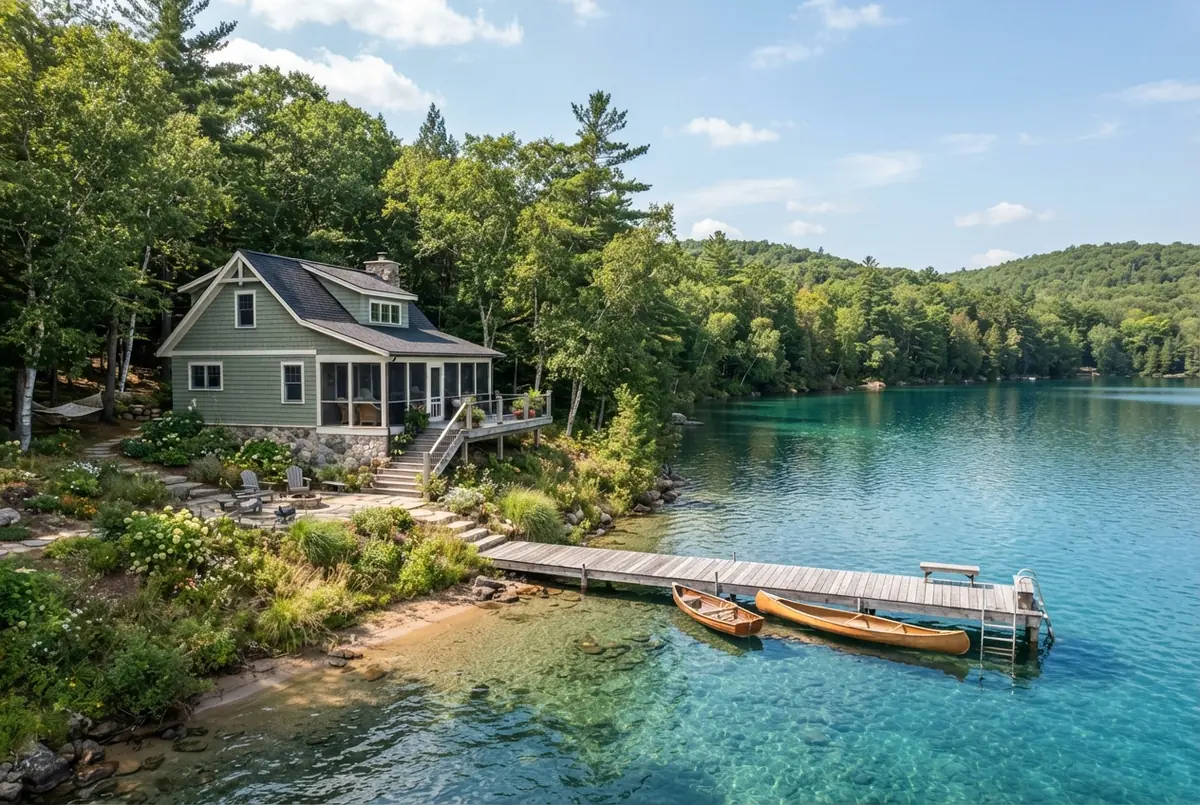
Overview of Michigan Short Term Rental Laws in 2026
As we move through 2026, the landscape for short term rentals in Michigan remains a complex patchwork of local control. Unlike some states that have passed sweeping statewide preemption laws, Michigan continues to grant significant authority to local municipalities. This means that while the state provides a broad framework for tax collection, the actual rules governing whether you can rent your property on a short term basis are defined almost entirely by your local city, township, or village.
For property owners, this "home rule" approach creates a high demand for compliance. A property in Traverse City is subject to vastly different regulations than a dwelling in Ann Arbor or a rural township in the Upper Peninsula. The Michigan Zoning Enabling Act (MZEA) remains the foundational law, empowering local governments to regulate land use. In 2026, many localities have refined their short term rental ordinance to balance the economic benefits of tourism with the desire to maintain the character of residential neighbors and the community.
Key takeaways for Michigan rentals in 2026 include:
- No Statewide Preemption: Local governments still hold the power to ban or limit short term rentals.
- Taxation is Mandatory: All rentals of less than 30 days are subject to a 6% state tax.
- Licensing is Local: Most popular tourist destinations now require specific str licenses or a short term rental license.
- Zoning Matters: Short term renting may be permitted in some districts but strictly prohibited in others.
Permits and Short Term Rental License Requirements
In 2026, obtaining a short term rental license is the first hurdle for any owner. Because there is no uniform state licensing system, you must apply through your local clerk's office. The cost and fee structure vary significantly depending on the city.
Application Process and Timelines
Most Michigan municipalities require a formal application prior to listing a property. This process typically involves:
- Proof of Ownership: Only the owner of record is typically allowed to hold the short term rental license.
- Site Plan: A basic map showing parking spaces and premises boundaries.
- Safety Inspection: Many cities require a fire safety inspection before str licenses are issued.
The timeline for approval generally ranges from 30 to 60 days. It is critical to start this process well prior to your intended launch date to avoid legal complications.
Specific Fees and Costs
The fee for a short term rental license in Michigan is not standardized. For example:
- Traverse City: Annual licensing fees can range from $150 to $500 depending on the property type.
- Ann Arbor: Fees for non owner occupied properties are often higher than for owner occupied properties, sometimes exceeding $600 annually.
- Small Townships: May charge a nominal fee of $50 to $100 for a simple registration.
Zoning Rules and Short Term Rental Regulations
Zoning is the primary tool used by Michigan local governments to control short term rentals. Under the MZEA, a township or city can limit where rentals occur by defining them as a specific land use.
Permitted vs. Prohibited Zones
In many Michigan communities, short term rentals are permitted "by right" in commercial or high-density residential zones but may require a "Special Use Permit" in single-family residential areas. Some neighbors have successfully lobbied for a total ban on short term rentals in specific historic or quiet residential districts.
Caps and Density Limits
To maintain housing availability for long-term residents, several Michigan cities have implemented a limit on the total number of short term rental units. For instance, a city might limit rentals to 25% of the total number of housing units in a specific community or block. Non owner occupied properties are frequently the first to face these limit restrictions, while owner occupied properties (where the owner lives on the premises) often enjoy more lenient rules.
Tax Obligations for Michigan Rentals
Understanding the tax implications is vital for compliance. In Michigan, short term rentals are subject to state-level taxes and, in some cases, local assessments.
State Use Tax
The most important tax is the Michigan Use Tax. Any rent collected for a dwelling for a period of less than one month (30 days) is subject to a 6% Use Tax.
- Airbnb: Generally collects and remits this tax automatically.
- VRBO/Direct Bookings: Often, the owner is responsible for collecting and remitting this 6% tax directly to the Michigan Department of Treasury.
Local Occupancy and Lodging Taxes
In addition to the state tax, certain county or city jurisdictions may impose a "Convention and Visitors Bureau" fee or a local lodging tax. These typically range from 1% to 5%. For example, properties in Kent County or Wayne County may see higher aggregate tax rates than those in rural areas.
Operational Rules and Safety Standards
Operating short term rentals in Michigan requires adhering to strict operational regulations designed to protect neighbors and ensure guest safety.
Occupancy Limits
Most short term rental ordinance language includes a limit on the number of guests. A common standard is two persons per bedroom plus an additional two persons per house, though this varies by city.
Parking and Noise
Parking is a frequent point of contention in Michigan rentals. Many ordinances require all guest parking to be contained on the premises (off-street). Furthermore, noise ordinances are strictly enforced, often with "quiet hours" typically starting at 10:00 PM.
The Good Neighbor Policy
Many Michigan cities now require property owners to provide a good neighbor guide to guests. This document outlines rules regarding trash disposal, parking, and noise to ensure the rentals do not disrupt the local community.
Need Help With Michigan STR Regulations?
Surge has hands-on experience navigating short-term rental regulations across the country. Whether you're applying for your first permit or scaling a portfolio, our team can help you stay compliant and profitable.
Schedule a Free Call →Traverse City Short Term Rental Ordinance
Traverse City remains one of the most regulated markets in Michigan. The city distinguishes between "tourist homes" and "vacation rentals."
- Licensing: A short term rental license is mandatory.
- Zoning: Short term rentals are generally prohibited in R-1 and R-2 (single and two-family) residential districts unless they meet specific "home-share" criteria.
- Safety: A fire escape plan must be graphically displayed in every guest room.
Ann Arbor Short Term Rental Regulations
Ann Arbor has implemented some of the strictest short term rental regulations in the state. The city focuses heavily on owner occupied properties.
- Primary Residence Requirement: In many residential zones, you can only rent your property if it is your primary residence.
- Non Owner Occupied Properties: These are often restricted to specific commercial or mixed-use districts.
- Compliance: The city uses automated software to track unpermitted rentals and issue fines.
Enforcement and Penalties
Local governments in Michigan have become increasingly aggressive in enforcing short term rental laws. Compliance is no longer optional; it is a requirement for business survival.
Fine Amounts
Operating without a short term rental license can result in significant financial legal penalties. Fines typically start at $500 per day for the first violation and can escalate to $1,000 or more for subsequent offenses. In some jurisdictions, a third violation can lead to a permanent ban on short term renting for that property.
Violation Procedures
Enforcement usually begins with a written warning or a "Notice of Violation." The owner is typically given a short window (7-14 days) to cease operations or bring the property into compliance. If the owner fails to act, the city may pursue legal action in district court.
Recent Legislative Changes (2025-2026 Updates)
The most significant update for 2026 is the continued failure of statewide preemption bills like the former HB 4722. While there were attempts in late 2025 to create a uniform Michigan short term rental ordinance, the Michigan Legislature has maintained the status quo, allowing local municipalities to keep their zoning authority.
However, new safety regulations have been introduced at the state level regarding carbon monoxide detectors and fire extinguishers in all short term rental units. Property owners must now ensure their dwelling meets these updated safety codes to maintain their licensing status.
Conclusion for Michigan Property Owners
Navigating michigan short term rental laws in 2026 requires diligence and local expertise. While the state provides the tax framework, your local township or city provides the rules. To succeed, property owners must prioritize compliance, respect their neighbors, and stay informed about the evolving short term rental ordinance in their specific community. By securing the proper short term rental license and following zoning regulations, you can build a sustainable and profitable short term rent business in the Great Lakes State.
Once you know the local rules, get the money side right too: our Michigan short term rental tax guide covers the 6% state use tax, county accommodations taxes, and filing requirements.
Ready to Invest in Michigan?
Navigating Michigan short-term rental regulations doesn't have to be overwhelming. Surge has years of experience helping investors stay compliant and maximize returns — from licensing and permitting to full property management.
Talk to a Surge Expert →Free consultation · No commitment required

Written by
Humberto MarquezFounder, Surge
Founder of Surge and licensed Texas real estate broker. Manages short-term rentals across 12 U.S. markets and invests in STRs himself. Quoted in Martha Stewart, Yahoo Finance, Realtor.com, Bob Vila.
More about Humberto →See what your property could earn with Surge
Full-service short term rental management across Texas and Florida. Get a free property assessment and revenue estimate, no commitment.